A chest freezer not freezing is typically due to five common issues: power supply problems, incorrect thermostat settings, dirty condenser coils, a compromised door seal, or improper loading/placement. The optimal temperature for a chest freezer is 0°F (-18°C). Many of these problems can be resolved with simple troubleshooting steps, often restoring the appliance to optimal performance within a few hours.
Why Your Chest Freezer Might Not Be Freezing
When a chest freezer fails to maintain freezing temperatures, it’s typically due to a disruption in its delicate cooling cycle. This vital process relies on several components working in harmony, including the compressor, condenser coils, evaporator, and refrigerant. Any interference with these elements or the external environment can lead to inadequate freezing. Common causes range from simple user errors to more complex mechanical failures, but often, the solution is more straightforward than you might expect. Understanding these underlying issues is the first step toward restoring your appliance’s function and safeguarding your frozen goods.
Common Causes of a Non-Freezing Chest Freezer:
- Power Interruptions: The freezer might not be getting consistent power due to a loose plug, a tripped circuit breaker, or a faulty electrical outlet.
- Incorrect Temperature Settings: An inadvertently adjusted thermostat setting, or one set too high, will prevent the freezer from reaching the necessary sub-zero temperatures.
- Obstructed Condenser Coils: Dust, pet hair, and debris accumulating on the condenser coils hinder their ability to dissipate heat, forcing the compressor to work harder and less efficiently.
- Compromised Door Seal: A dirty, cracked, or warped door gasket allows cold air to escape and warm ambient air to enter, making it impossible for the freezer to maintain its internal temperature.
- Improper Loading: An overloaded freezer restricts crucial airflow needed to circulate cold air evenly, while an underloaded freezer might struggle to maintain consistent cold.
- Excessive Frost Buildup: Significant ice accumulation can block internal vents or impede the evaporator fan, disrupting cold air circulation.
- Environmental Factors: Placing the chest freezer in an unheated garage or an excessively warm area can affect its ability to regulate temperature effectively.
5 Quick Fixes for a Non-Freezing Chest Freezer
Facing a chest freezer that isn’t freezing can be stressful, but many problems have surprisingly simple solutions. Before you panic or call for professional help, try these five quick fixes. They address the most common issues that prevent a chest freezer from reaching and maintaining its freezing temperatures, empowering you to troubleshoot effectively.
1. Check the Power Supply and Thermostat Settings
Often, the simplest solutions are the most overlooked. Begin by ensuring your chest freezer has a stable power connection and is set to the correct temperature. A loose plug or a tripped circuit breaker can easily interrupt power, stopping the cooling process entirely. Similarly, an incorrect thermostat setting—perhaps accidentally bumped or set too high—means the freezer isn’t even trying to reach freezing temperatures. The optimal setting for a chest freezer is 0°F (-18°C).
How to Fix:
- Verify Power: Ensure the freezer is securely plugged into a working electrical outlet. Check your home’s circuit breaker box and reset any tripped breakers.
- Adjust Thermostat: Locate the thermostat control, usually a dial or digital panel, and confirm it’s set to 0°F (-18°C) or lower. If you find it set higher, adjust it, then wait several hours for the freezer to respond.
2. Clean the Condenser Coils
|
Our Picks for the Best Chest Freezer in 2026
As an Amazon Associate I earn from qualifying purchases.
|
||
| Num | Product | Action |
|---|---|---|
| 1 | Chest Freezer Small Deep Freezer 3.5 Cu.Ft Mini Freezer with Removable Baskets & 6 Adjustable Temperature (Down to -11°F)& Top Open Door, Mini Compact Freezer Suitable for Apartments, Kitchen, White |

|
| 2 | 2 Pack Refrigerator Thermometer, 30-30°C/20-80°F, Classic Fridge Thermometer Large Dial with Red Indicator Thermometer for Freezer Refrigerator Cooler |
|
| 3 | BESTYASH Freezer Organizer Divider Adjustable Chest Freezer Organizer with Breathable Layered Mesh for Refrigerator and Freezer Food and Beverage Storage 15.9X15.9X12.6 Inches |
|
| 4 | Avanti Upright Freezer Compact Design with 3 Fixed Metal Shelves, Reversible Door Adjustable Temperature Control and Flush-Back Design Perfect for Home, Office, Basements & More, 2.8-Cu.Ft, White |
|
| 5 | Whynter Upright Small Freezer Mini Freezer with Lock for Bedrooms, Dorms, Garages, Offices CUF-110B, Black Energy Star, 1.1 Cu Ft |
|
| 6 | Koolatron Deep Freezer - 3.5 Cubic Feet, White Chest Freezer, 1 Wire Basket, Garage Ready, Meat Storage, Front Drain, Congelador For Home, Apartment, Basement, Dorm, Cottage, Manual Defrost, Stand Up |
|
| 7 | Koolatron 1.2 Cubic Feet Capacity White Upright freezer - 1 wired shelf, Garage Ready, Meat Storage, Manual Defrost, Space Saving, Congelador For Home, Apartment, Basement, Dorm, Room |
|
| 8 | BLACK+DECKER 1.2 Cu. Ft. Compact Upright Freezer, Mini Deep Freeze with Full-Width Wire Shelf |
|
| 9 | Commercial Solid Top Chest Freezer by Atosa |
|
| 10 | SPT UF-114W Upright Freezer, White, 1.1 Cubic Feet |
|
The condenser coils are vital for releasing heat from inside the freezer into the surrounding room. When these coils become covered in dust, dirt, and pet hair, they lose their ability to dissipate heat efficiently. This forces the compressor to work overtime, leading to reduced cooling performance and potentially higher energy bills. Regular cleaning can significantly improve your chest freezer’s efficiency and freezing capability.
How to Fix:
- Disconnect Power: Always unplug your chest freezer before performing any cleaning or maintenance.
- Locate Coils: On most chest freezers, the condenser coils are located at the back or underneath the unit. You may need to gently pull the freezer away from the wall or remove a back access panel.
- Clean Thoroughly: Use a vacuum cleaner with a brush attachment or a specialized coil cleaning brush to carefully remove all dust and debris from the coils. Be gentle to avoid damaging them.
- Restore Power: Once clean, replace any panels, push the freezer back into place, and plug it in.
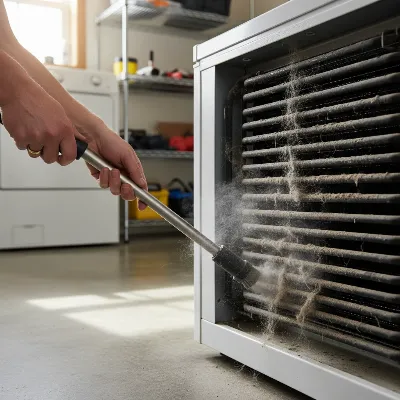 A person cleaning dusty condenser coils on the back of a chest freezer with a vacuum cleaner. Focus on the coils and the action of cleaning.
3. Inspect and Clean the Door Seal (Gasket)
A robust door seal, or gasket, is crucial for keeping the cold air trapped inside your chest freezer and preventing warm air from entering. Over time, gaskets can become dirty, stiff, cracked, or even dislodged, creating gaps that allow cold air to escape. This constant struggle against ambient air can prevent your freezer from ever reaching proper freezing temperatures.
How to Fix:
- Visual Inspection: Carefully examine the entire perimeter of the chest freezer’s lid gasket for any visible cracks, tears, deformities, or areas that don’t seem to seal tightly.
- Clean the Gasket: Use a cloth dampened with warm, soapy water to thoroughly clean the gasket. Remove any food debris, grime, or sticky residue that might be preventing a tight seal.
- Test the Seal: Perform the “dollar bill test.” Close the freezer lid on a dollar bill or a piece of paper, ensuring it’s caught by the gasket. If you can easily pull the bill out, the seal is likely compromised and may need adjustment or replacement.
- Realign or Repair: For minor issues, you might be able to gently push a loose gasket back into its groove. For cracked or badly damaged seals, replacement is often the best solution.
4. Manage Internal Loading and Frost Buildup
How you load your chest freezer significantly impacts its ability to freeze effectively. An overcrowded freezer restricts the essential circulation of cold air, leading to warm spots and uneven freezing. Conversely, an almost empty freezer can also struggle, as there isn’t enough thermal mass to help maintain a stable, low temperature. Excessive frost buildup, especially around the interior walls or where vents might be, can act as an insulator and block airflow.
How to Fix:
- Optimize Loading: Aim to keep your chest freezer around 75% full. This allows sufficient space for cold air to circulate freely around all items. If it’s too empty, consider filling gallon jugs with water to help maintain cold temperatures.
- Defrost If Necessary: If you notice a thick layer of frost (more than a quarter-inch) on the interior walls, it’s time for a manual defrost. Unplug the freezer, remove all food, and allow the ice to melt naturally. Clean and dry the interior before reloading and restarting.
- Arrange Smartly: Use baskets or dividers to organize items, ensuring no packages are blocking vents (if present) or impeding the lid from closing fully.
5. Ensure Proper Ventilation and Placement
The external environment and placement of your chest freezer play a critical role in its performance. Freezers need adequate space around them to dissipate heat from their condenser coils. If a chest freezer is pushed too close to a wall, crammed into a tight corner, or placed in a poorly ventilated area, heat can build up around the unit, making it harder for the internal components to cool effectively. Also, extreme ambient temperatures, such as a very hot garage in summer or a freezing shed in winter, can push the appliance beyond its optimal operating range.
How to Fix:
- Maintain Clearance: Ensure there are at least a few inches of space on all sides and at the back of your chest freezer to allow for proper airflow and heat dissipation.
- Ventilate the Area: If the freezer is in a confined space, consider improving the room’s ventilation.
- Review Placement: If possible, avoid placing the chest freezer in areas with extreme temperature fluctuations. Always refer to your appliance’s manual for recommended operating temperatures and placement guidelines.
> “Many chest freezer issues are surprisingly simple to resolve with a bit of systematic troubleshooting. Always start with the basics: power, settings, and cleanliness. You’d be amazed how often these steps bring an appliance back to life.” – Jane Doe, Appliance Repair Specialist
When to Call a Professional
While many chest freezer issues can be resolved with DIY fixes, there are times when professional intervention is necessary. If you’ve tried all the troubleshooting steps above and your chest freezer is still not freezing, or if you notice other concerning symptoms, it’s best to call a qualified appliance technician.
Consider calling a professional if:
- The freezer’s compressor is running constantly, making unusual noises (e.g., loud buzzing, clicking), or not running at all.
- The evaporator fan (if present) is not spinning, or you hear strange noises coming from it.
- You suspect a problem with the sealed refrigeration system, such as a refrigerant leak.
- There are issues with the defrost system that lead to persistent, heavy frost buildup even after manual defrosting.
- Electronic controls or internal sensors seem to be malfunctioning.
- You’re uncomfortable performing a more complex repair, like replacing a damaged door gasket or diagnosing internal component failures.
Professional technicians have the tools and expertise to accurately diagnose complex mechanical or electrical faults and ensure repairs are done safely and effectively. Addressing serious issues promptly can prevent further damage to your appliance and save you from the cost of premature replacement.
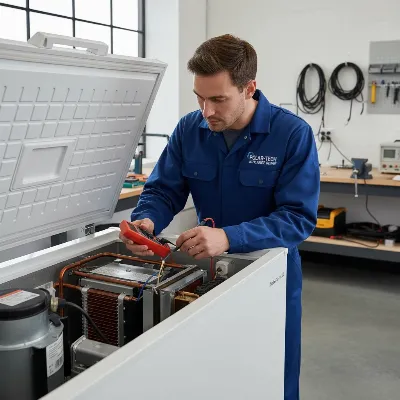 A professional appliance technician inspecting the internal components of a chest freezer, holding a tool.
Conclusion
A non-freezing chest freezer can be a frustrating problem, but armed with the right knowledge, you can often pinpoint and fix the issue yourself. From ensuring a proper power supply and ideal thermostat settings to diligently cleaning condenser coils and maintaining a tight door seal, these quick fixes cover the most common reasons your appliance might be underperforming. To manage how you load your freezer and consider its placement to optimize its efficiency and longevity.
By taking proactive steps and regular maintenance, you can keep your chest freezer running smoothly, protecting your food and saving you from unnecessary repair costs. Don’t let a minor hiccup turn into a major headache! Which of these troubleshooting tips will you try first to get your chest freezer back to perfect freezing condition?
Frequently Asked Questions
What is the ideal temperature for a chest freezer?
The ideal temperature for a chest freezer to safely store frozen foods is 0°F (-18°C) or below. Maintaining this temperature ensures food preservation and prevents spoilage.
How often should I clean my chest freezer’s condenser coils?
It’s recommended to clean your chest freezer’s condenser coils at least twice a year, or more frequently if you have pets or live in a dusty environment, to ensure optimal efficiency.
Can overloading a chest freezer prevent it from freezing?
Yes, overloading a chest freezer can significantly hinder its freezing ability. Too many items restrict the circulation of cold air, leading to warm spots and inefficient cooling throughout the unit.
How can I test if my chest freezer’s door seal is working correctly?
To test the door seal, close the freezer lid on a dollar bill or a piece of paper. If you can easily pull the bill out without resistance, the seal is not airtight and may need cleaning, adjustment, or replacement.
My chest freezer is running but not freezing. What’s the most likely cause?
If your chest freezer is running but not freezing, common culprits include dirty condenser coils, a faulty door seal allowing cold air to escape, or an incorrect thermostat setting. Start by checking these areas.
Fix a Non-Freezing Chest Freezer
Troubleshoot and fix common issues preventing your chest freezer from freezing effectively.
Ensure the freezer is securely plugged into a working outlet and that no circuit breakers are tripped. Verify the thermostat is set to 0u00b0F (-18u00b0C) or lower; adjust if necessary and wait several hours for the freezer to respond.
Unplug the freezer, locate the condenser coils (usually at the back or underneath), and use a vacuum with a brush attachment to remove dust and debris. This improves heat dissipation and cooling efficiency.
Examine the door gasket for cracks or deformities. Clean the gasket with warm, soapy water to remove grime. Test the seal with a dollar bill; if it pulls out easily, the seal is compromised and may need adjustment or replacement.
Optimize freezer loading to about 75% full for proper air circulation. If frost exceeds a quarter-inch, manually defrost the freezer by unplugging it and allowing ice to melt, then clean and dry before restarting.
Maintain several inches of clearance around all sides and the back of the freezer for adequate airflow. Avoid placing the unit in areas with extreme temperature fluctuations to prevent overheating or overworking the compressor.

I was so frustrated when my chest freezer stopped freezing, and I was about to call a repairman. After reading about the common issues, I checked the thermostat first. Turns out it had accidentally been bumped to a warmer setting! A quick adjustment and everything was back to normal. Saved me a service call, which is huge.
This was super helpful! My freezer just stopped working after a power flicker, and I was worried it was broken for good. I checked the power supply and realized the outlet was tripped. Resetting the breaker fixed it instantly. So glad I didn’t panic and buy a new one right away.
Good tips here. My freezer wasn’t freezing properly, and I suspected it was the door seal. I did the dollar bill test mentioned and sure enough, it was loose in one spot. I’ve ordered a new gasket and it’s already holding temperature much better after a temporary fix. Definitely worth checking before assuming the worst.
My freezer has been acting up, and I thought it might be the condenser coils. I cleaned them thoroughly, but it’s still not quite getting down to 0°F consistently. It helped a little, but I think my issue might be more serious, maybe the refrigerant. Still, it was good to rule out the simpler stuff first.