Moving a heavy chest freezer safely without damage requires careful planning, the right tools, and adherence to specific steps, including defrosting, using an appliance dolly, and allowing adequate settling time before plugging it back in. These robust appliances contain delicate internal components and a cooling system susceptible to damage from jarring movements or improper positioning, making a methodical approach essential for a successful relocation.
Why Moving a Chest Freezer Requires Careful Planning
Attempting to move a chest freezer without a well-thought-out plan can lead to various complications. First and foremost, their sheer weight and awkward bulk pose a significant risk of personal injury, particularly back strain, if incorrect lifting techniques are used. Beyond personal safety, the internal cooling system, including the compressor and delicate refrigerant lines, is susceptible to damage from jarring movements or improper positioning during transport. Dragging a heavy appliance across floors can scratch surfaces, while bumping into walls or doorways can mar both your home and the freezer’s exterior. Understanding these potential hazards underscores why a methodical approach is not just recommended, but essential for a successful, damage-free relocation.
Essential Tools and Equipment for a Smooth Move
To ensure a safe and efficient move, gathering the right equipment beforehand is crucial. Investing a little time and possibly a small rental fee for specialized tools can save you significant trouble and expense in the long run. For chest freezer buying guides on this site.
Here’s a checklist of what you’ll need:
- Appliance Dolly with Straps: This is arguably the most critical piece of equipment. An appliance dolly is designed to handle heavy loads and often comes with straps to secure the freezer, preventing it from shifting during transport.
- Furniture Sliders: These handy discs can be placed under the freezer’s feet to help it glide across floors (hardwood or carpet) without scratching or excessive effort.
- Moving Blankets or Thick Towels: Essential for protecting the freezer’s finish from scratches and dents, as well as cushioning it against bumps during transit.
- Ratchet Straps: Used to secure the freezer firmly within the moving vehicle, preventing any movement that could cause damage.
- Packing Tape: For securing the freezer lid, power cord, and any loose internal components.
- Cleaning Supplies: A soft non-abrasive sponge, cloth, and warm water for defrosting and cleaning the interior.
- Measuring Tape: To measure doorways, hallways, and the freezer itself to ensure clearance.
- Gloves: Work gloves can provide a better grip and protect your hands during the lifting and maneuvering process.
- Loading Ramp: If you’re moving the freezer into a truck or van, a sturdy ramp will make loading and unloading significantly safer and easier.
Step-by-Step Guide to Safely Relocating Your Chest Freezer
Moving a chest freezer is a multi-stage process that requires patience and precision. Following these steps diligently will minimize risks and ensure your appliance arrives in perfect working order.
1. Preparation: Empty, Defrost, and Clean
|
Our Picks for the Best Chest Freezer in 2026
As an Amazon Associate I earn from qualifying purchases.
|
||
| Num | Product | Action |
|---|---|---|
| 1 | 2 Pack Refrigerator Thermometer, 30-30°C/20-80°F, Classic Fridge Thermometer Large Dial with Red Indicator Thermometer for Freezer Refrigerator Cooler |

|
| 2 | BESTYASH Freezer Organizer Divider Adjustable Chest Freezer Organizer with Breathable Layered Mesh for Refrigerator and Freezer Food and Beverage Storage 15.9X15.9X12.6 Inches |
|
| 3 | Commercial Solid Top Chest Freezer by Atosa |
|
| 4 | BLACK+DECKER 1.2 Cu. Ft. Compact Upright Freezer, Mini Deep Freeze with Full-Width Wire Shelf |
|
| 5 | Whynter Upright Small Freezer Mini Freezer with Lock for Bedrooms, Dorms, Garages, Offices CUF-110B, Black Energy Star, 1.1 Cu Ft |
|
| 6 | Koolatron 1.2 Cubic Feet Capacity White Upright freezer - 1 wired shelf, Garage Ready, Meat Storage, Manual Defrost, Space Saving, Congelador For Home, Apartment, Basement, Dorm, Room |
|
| 7 | Koolatron Deep Freezer - 3.5 Cubic Feet, White Chest Freezer, 1 Wire Basket, Garage Ready, Meat Storage, Front Drain, Congelador For Home, Apartment, Basement, Dorm, Cottage, Manual Defrost, Stand Up |
|
| 8 | Chest Freezer Small Deep Freezer 3.5 Cu.Ft Mini Freezer with Removable Baskets & 6 Adjustable Temperature (Down to -11°F)& Top Open Door, Mini Compact Freezer Suitable for Apartments, Kitchen, White |
|
| 9 | SPT UF-114W Upright Freezer, White, 1.1 Cubic Feet |
|
| 10 | Avanti Upright Freezer Compact Design with 3 Fixed Metal Shelves, Reversible Door Adjustable Temperature Control and Flush-Back Design Perfect for Home, Office, Basements & More, 2.8-Cu.Ft, White |
|
The most vital step before moving your freezer is thorough preparation. Begin by emptying all contents and storing perishable items in coolers with ice or another working freezer. Next, unplug the freezer and initiate the defrosting process. This should ideally start at least 24 to 48 hours before the move to allow all ice to melt completely. Place towels around the base and inside the freezer to absorb melting water, or use a pan if your model has a drain. Once defrosted, clean the interior with a mild soap solution and dry it completely to prevent mold, mildew, and unpleasant odors during transport. Finally, secure the power cord to the back of the appliance with tape to prevent it from snagging or becoming a tripping hazard. Remove any loose internal baskets or dividers and pack them separately.
2. Planning the Route and Enlisting Help
Before you even attempt to lift, take time to plan your route. Clear all pathways, both inside and outside your home, removing any obstacles like rugs, furniture, or toys. Use your measuring tape to check the width and height of all doorways, hallways, and stairwells the freezer will need to pass through. If necessary, temporarily remove doors from their hinges to create more space. Crucially, never try to move a heavy chest freezer alone. Enlist the help of at least one strong assistant, or ideally two, to share the load and assist with maneuvering.
3. Lifting and Securing for Transport
For short distances across a room, carefully tilt the freezer and slide furniture sliders underneath each corner or leg. With a helper, you can then gently push the freezer into position. For longer moves or loading onto a dolly, position the appliance dolly next to the freezer. With the help of your team, tilt the freezer slightly to one side and slide the dolly platform underneath it. Once centered, slowly tilt the freezer back onto the dolly. Secure the freezer tightly to the dolly using its built-in straps or ratchet straps. Throughout this process, strive to keep the freezer as upright as possible to protect its internal components.
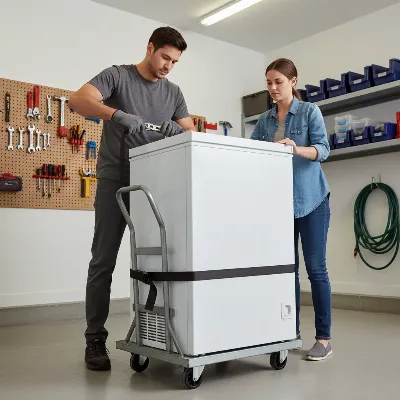 People securing a large chest freezer onto an appliance dolly with straps inside a home, ready for transport.
4. Loading onto the Moving Vehicle
If you’re using a moving truck or van, a sturdy loading ramp is invaluable. Position the ramp securely against the vehicle. With one person guiding the dolly from the front and another pushing from behind, slowly and carefully roll the freezer up the ramp into the vehicle. If a ramp isn’t available, two or more strong individuals will need to lift the freezer directly into the vehicle, always lifting with their legs, not their backs, and maintaining a firm grip from the bottom. Once inside the vehicle, position the freezer towards the front, distributing weight evenly. Pad the freezer with moving blankets to protect it from scratches and bumps, then secure it firmly to the vehicle’s interior walls using ratchet straps to prevent any shifting during transit.
5. Unloading and Positioning at the New Location
Upon arrival, carefully reverse the loading process. Use the ramp for unloading if available, guiding the dolly down slowly. Once off the vehicle, wheel the freezer to its final destination. As you maneuver it indoors, take wide turns and be mindful of doorways and furniture. Carefully remove the freezer from the dolly, using proper lifting techniques, and gently place it in its permanent spot.
6. Settling Time Before Powering On
This step is critical and often overlooked. After moving, the compressor oil inside the freezer may have shifted. Plugging it in immediately can cause damage to the compressor. If your chest freezer was transported upright, it is generally recommended to let it sit undisturbed for at least 2 to 4 hours before plugging it back into the power source. If, however, the freezer had to be laid on its side for any period during transport, you must allow it to sit upright for a longer duration—at least the same amount of time it was on its side, and preferably a full 24 hours. This allows the compressor oil to fully settle back into its proper place, ensuring the appliance operates correctly and without premature failure.
Common Mistakes to Avoid When Moving a Chest Freezer
Moving a heavy appliance like a chest freezer is ripe for potential errors. Being aware of these common pitfalls can help you avoid costly mistakes and injuries.
- Moving it alone: Attempting to move a chest freezer solo is a recipe for injury and damage. Always enlist sufficient help.
- Not defrosting completely: Remaining ice will melt during transit, potentially leaking water and causing damage to your floors or vehicle.
- Laying it on its side unnecessarily or not allowing settling time: As discussed, this can cause compressor oil to displace, leading to damage if plugged in too soon. Always prioritize keeping it upright.
- Dragging instead of lifting/rolling: Dragging can severely damage the freezer’s base, legs, and your flooring. Always use appropriate lifting or rolling equipment.
- Not securing doors or contents: An unsecured lid can swing open, causing damage to itself or anything in its path. Loose internal components can rattle and break.
- Not clearing the path: Obstacles create tripping hazards and increase the risk of bumping into walls or furniture.
When to Consider Hiring Professional Movers
While moving a chest freezer can be a DIY project, there are situations where hiring professionals is the smarter choice. If your freezer is exceptionally large or heavy, if you lack sufficient help, or if your move involves navigating stairs, tight turns, or complex architectural features, professional movers have the experience, specialized equipment, and insurance to handle the job safely and efficiently. Their expertise can save you from potential injury, damage to your property, and expensive repairs to your appliance.
“Moving a chest freezer isn’t just about muscle; it’s about method. Proper planning, the right tools, and an understanding of how these appliances work are far more valuable than brute strength alone.” – John D. Miller, Appliance Logistics Specialist
Conclusion
Moving a heavy chest freezer safely without damage is an achievable task, provided you approach it with careful planning, the right tools, and a focus on safety. From emptying and defrosting to utilizing proper lifting techniques and allowing adequate settling time, each step plays a crucial role in ensuring a smooth transition. Prioritize your safety and the integrity of your appliance by enlisting help, preparing your path, and never rushing the process. By following these guidelines, you can successfully relocate your chest freezer, preserving its functionality and extending its lifespan for years to come.
Frequently Asked Questions
How long do I have to wait to plug in a freezer after moving it?
If your chest freezer was moved upright, wait 2-4 hours before plugging it in. If it was laid on its side at any point, it’s crucial to let it sit upright for at least as long as it was on its side, and ideally 24 hours, to allow the compressor oil to settle properly and prevent damage.
Can you move a chest freezer on its side?
While generally not recommended, if necessary, a chest freezer can be moved on its side for a short period. It’s best to lay it on the side where the compressor is located. However, you must then allow it to sit upright for an extended period (up to 24 hours) before plugging it in to let the compressor oil redistribute.
What happens if you move a freezer on its side and plug it in right away?
Plugging a freezer in immediately after it has been moved on its side can cause the compressor oil to enter the refrigerant lines. This can lead to a blockage or damage to the compressor, potentially resulting in the freezer failing to cool properly or breaking down entirely, requiring expensive repairs or replacement.
Frequently Asked Questions
How long should a chest freezer sit after moving before plugging it in?
If your chest freezer was moved upright, you should wait 2 to 4 hours before plugging it in. If it was laid on its side during transport, it's crucial to let it sit upright for at least the same amount of time it was on its side, and preferably a full 24 hours, to allow the compressor oil to settle properly.
Is it safe to move a chest freezer on its side?
Moving a chest freezer on its side is generally not recommended due to the risk of compressor oil displacement. If absolutely necessary, lay it on the side where the compressor is located, but ensure it sits upright for an extended period (up to 24 hours) before plugging it in.
What are the risks of plugging in a freezer too soon after moving?
Plugging in a freezer immediately after it has been moved, especially on its side, can cause compressor oil to enter the refrigerant lines. This can lead to blockages, damage to the compressor, and potentially result in the freezer failing to cool properly or breaking down completely, requiring expensive repairs.
What essential tools are needed to move a heavy chest freezer?
To move a heavy chest freezer safely, essential tools include an appliance dolly with straps, furniture sliders, moving blankets, ratchet straps, and packing tape. A loading ramp is also highly recommended if moving the freezer into a truck or van.
Why is defrosting important before moving a chest freezer?
Defrosting a chest freezer completely before moving is vital to prevent water leaks during transit, which could damage your floors or vehicle. It also reduces the overall weight of the appliance and helps prevent mold, mildew, and odors from developing during transport.
How to Safely Relocate Your Chest Freezer
This guide outlines the essential steps to safely move a heavy chest freezer without causing damage to the appliance or your property.
Empty all contents, store perishables, and unplug the freezer. Allow 24 to 48 hours for complete defrosting, absorbing melting water with towels. Clean and dry the interior, then secure the power cord and remove any loose internal components.
Clear all pathways inside and outside your home, removing obstacles. Measure doorways and hallways to ensure clearance, temporarily removing doors if needed. Enlist at least one, or ideally two, strong assistants to help with lifting and maneuvering.
For short distances, use furniture sliders. For longer moves, position an appliance dolly next to the freezer, tilt it, and slide the dolly platform underneath. Secure the freezer tightly to the dolly with straps, keeping it as upright as possible.
Use a sturdy loading ramp if available, guiding the dolly up slowly. If no ramp, lift with legs, not backs, maintaining a firm grip. Position the freezer towards the front of the vehicle, pad with moving blankets, and secure firmly with ratchet straps.
After moving, if the freezer was transported upright, let it sit for 2 to 4 hours before plugging it in. If it was laid on its side, allow it to sit upright for at least the same duration it was on its side, and preferably a full 24 hours, to allow compressor oil to settle.

Great info! I’ve moved my chest freezer a couple of times now, and I always forget about the compressor. This reminded me why a methodical approach is so important to prevent damage. I’m glad I read this before my next move, as I definitely want to protect my investment.
I just moved last month and this guide was a lifesaver! I was so worried about damaging my new chest freezer, especially after reading about the delicate refrigerant lines. Following the steps for defrosting and using an appliance dolly made the whole process so much smoother. It’s been running perfectly ever since I plugged it back in after the settling time.
This was exactly what I needed! I was dreading moving my heavy chest freezer, but the step-by-step instructions made it feel much less daunting. I particularly appreciated the warning about personal injury and using correct lifting techniques. My back thanks you!
The advice here was mostly good, especially about the importance of letting it settle. My only minor complaint is that it didn’t emphasize enough how hard it is to get an appliance dolly through doorways. We had to really maneuver it and almost scratched the frame. Still, the tips on avoiding back strain were helpful.