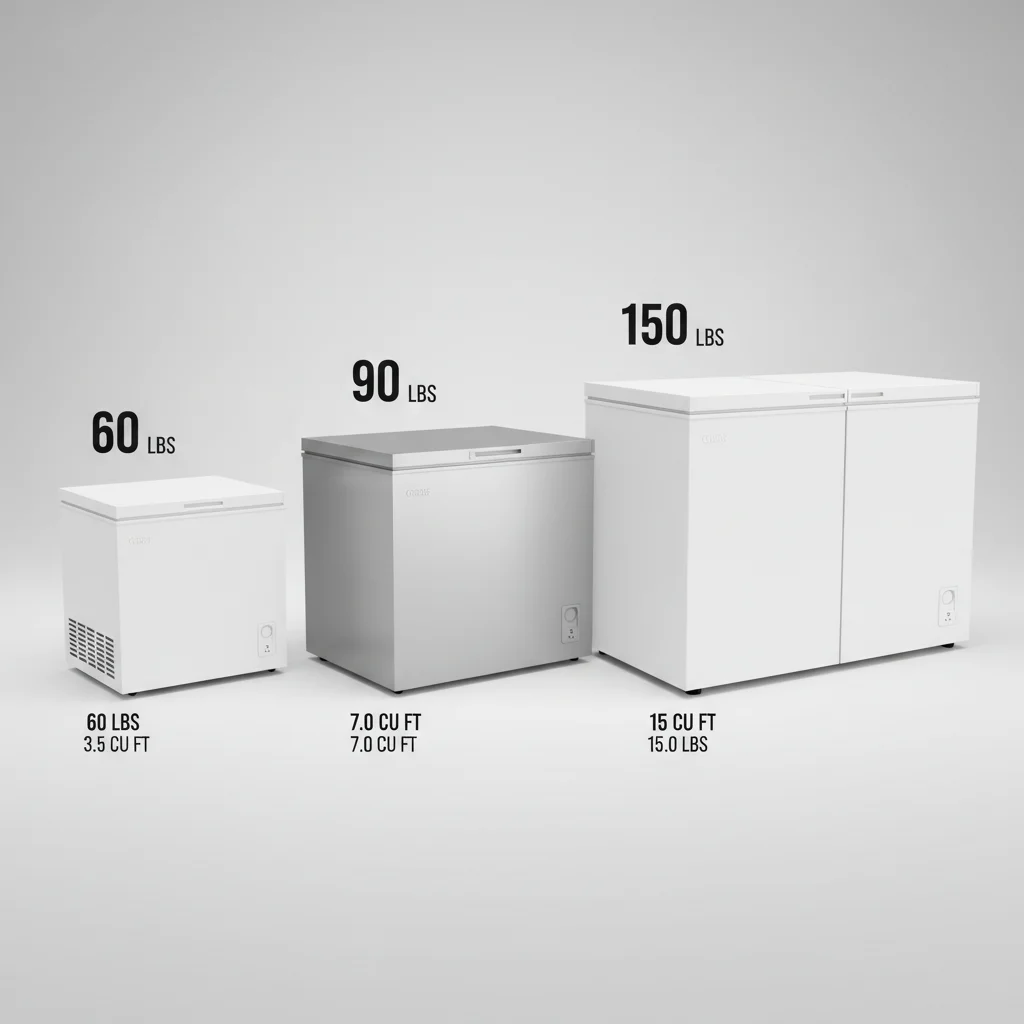
A typical residential chest freezer weighs between 70 and 200 pounds, with the exact weight depending significantly on its capacity and construction materials. Smaller units, around 3.5 to 5 cubic feet, often weigh under 100 pounds, while larger models exceeding 15 cubic feet can easily surpass 150-200 pounds. Understanding this weight is crucial for safe delivery, installation, and especially for moving the appliance.
Factors Influencing Chest Freezer Weight
Several key factors contribute to the overall weight of a chest freezer. The most significant is its capacity, measured in cubic feet. Smaller units, around 3.5 to 7 cubic feet, tend to be lighter, often weighing under 100 pounds. Conversely, larger freezers, exceeding 13 cubic feet, can easily surpass 150-200 pounds. The materials used in construction also play a role; while most feature steel exteriors and insulated interiors, variations in steel gauge and insulation density can add or subtract weight. For instance, a unit with thicker, more robust insulation for extreme climates might be heavier than a standard model.
Average Weights by Capacity
To provide a clearer picture, here’s a breakdown of average weights by common chest freezer capacities:
- Small (3.5-7 cubic feet): 65-100 pounds
- Medium (8-12 cubic feet): 100-150 pounds
- Large (13-20 cubic feet): 150-220 pounds
- Extra-Large (20+ cubic feet): 220-300+ pounds
These figures represent empty weights. Once filled with food, the total weight will increase substantially, making it even more challenging to move. Always consult the manufacturer’s specifications for the precise weight of a particular model.
Why Knowing the Weight Matters
Knowing the exact weight of your chest freezer is vital for several practical reasons. Firstly, it impacts delivery and installation. Many retailers offer white-glove delivery for heavier appliances, but if you’re handling it yourself, you’ll need appropriate equipment like a hand truck or furniture dolly, and often, extra help. Secondly, for moving, especially up or down stairs, understanding the weight helps you plan for safety and prevent injury or damage to the unit or your home. Lastly, if you’re placing the freezer on an upper floor or a structure with weight limitations, confirming the floor’s capacity is essential.
Tips for Moving a Heavy Chest Freezer
|
Our Picks for the Best Chest Freezer in 2026
As an Amazon Associate I earn from qualifying purchases.
|
||
| Num | Product | Action |
|---|---|---|
| 1 | Koolatron Deep Freezer - 3.5 Cubic Feet, White Chest Freezer, 1 Wire Basket, Garage Ready, Meat Storage, Front Drain, Congelador For Home, Apartment, Basement, Dorm, Cottage, Manual Defrost, Stand Up |

|
| 2 | Chest Freezer Small Deep Freezer 3.5 Cu.Ft Mini Freezer with Removable Baskets & 6 Adjustable Temperature (Down to -11°F)& Top Open Door, Mini Compact Freezer Suitable for Apartments, Kitchen, White |
|
| 3 | 2 Pack Refrigerator Thermometer, 30-30°C/20-80°F, Classic Fridge Thermometer Large Dial with Red Indicator Thermometer for Freezer Refrigerator Cooler |
|
| 4 | BLACK+DECKER 1.2 Cu. Ft. Compact Upright Freezer, Mini Deep Freeze with Full-Width Wire Shelf |
|
| 5 | BESTYASH Freezer Organizer Divider Adjustable Chest Freezer Organizer with Breathable Layered Mesh for Refrigerator and Freezer Food and Beverage Storage 15.9X15.9X12.6 Inches |
|
| 6 | Koolatron 1.2 Cubic Feet Capacity White Upright freezer - 1 wired shelf, Garage Ready, Meat Storage, Manual Defrost, Space Saving, Congelador For Home, Apartment, Basement, Dorm, Room |
|
| 7 | Whynter Upright Small Freezer Mini Freezer with Lock for Bedrooms, Dorms, Garages, Offices CUF-110B, Black Energy Star, 1.1 Cu Ft |
|
| 8 | Commercial Solid Top Chest Freezer by Atosa |
|
| 9 | Avanti Upright Freezer Compact Design with 3 Fixed Metal Shelves, Reversible Door Adjustable Temperature Control and Flush-Back Design Perfect for Home, Office, Basements & More, 2.8-Cu.Ft, White |
|
| 10 | SPT UF-114W Upright Freezer, White, 1.1 Cubic Feet |
|
Moving a chest freezer, regardless of its size, requires careful planning. Always empty and defrost the freezer completely before attempting to move it. This not only reduces the weight but also prevents water spills. Secure the lid with tape or straps to prevent it from opening during transit. Use a heavy-duty appliance dolly with straps to secure the freezer. When navigating stairs, it’s always best to have at least two people, one at the top pulling and one at the bottom guiding and supporting. Avoid tilting the freezer more than 45 degrees, as this can damage the compressor. After moving, allow the freezer to sit upright for several hours (typically 4-6) before plugging it in, to allow the compressor oils to settle.
For those considering a new chest freezer, comparing models not just on capacity and features but also on weight can be a smart move, especially if you anticipate needing to relocate it in the future. Check out our top-rated lightweight models here:.
Impact of Features on Weight
While capacity is the primary driver, certain features can also subtly influence a chest freezer’s weight. For instance, models with thicker, more robust insulation designed for garage or outdoor use might be slightly heavier due to the increased material density. Similarly, units with internal baskets, dividers, or specialized lighting might add a few extra pounds. However, these additions are generally minor compared to the overall structural weight. Energy-efficient models often feature advanced insulation, which can sometimes be denser, contributing marginally to the weight. For a comprehensive comparison of various models and their specifications, including weight, consider reviewing our detailed buying guide:.
Frequently Asked Questions
What is the average weight of a small chest freezer?
A small chest freezer, typically ranging from 3.5 to 7 cubic feet, generally weighs between 65 and 100 pounds when empty. This makes them relatively easier to move compared to larger models.
How much does a large chest freezer weigh?
Large chest freezers, with capacities from 13 to 20 cubic feet, typically weigh between 150 and 220 pounds when empty. Extra-large units over 20 cubic feet can exceed 300 pounds.
Why is it important to know the weight of a chest freezer?
Knowing the weight of a chest freezer is important for safe delivery, installation, and moving. It helps determine if you need professional help, specific equipment like an appliance dolly, and ensures the floor can support its load.
What factors primarily affect a chest freezer's weight?
The primary factors affecting a chest freezer's weight are its capacity, measured in cubic feet, and the materials used in its construction. Larger capacities and denser insulation materials contribute to a heavier unit.
Should I empty and defrost my chest freezer before moving it?
Yes, you should always empty and defrost your chest freezer completely before moving it. This significantly reduces the overall weight and prevents any water spills during transit, making the move safer and cleaner.
How to Safely Move a Heavy Chest Freezer
Moving a chest freezer requires careful planning and execution to prevent injury or damage. Follow these steps for a safe relocation.
Completely empty all contents from the chest freezer and defrost it thoroughly. This crucial step reduces the overall weight and prevents any water from spilling during the move.
Once empty and defrosted, secure the freezer lid with strong tape or straps to prevent it from opening unexpectedly during transit. Use a heavy-duty appliance dolly with straps to safely secure the freezer for movement.
Always enlist at least two people for moving, especially when navigating stairs. One person should pull from the top while the other guides and supports from the bottom. Avoid tilting the freezer more than 45 degrees to protect the compressor.
After the freezer has been moved to its new location, allow it to sit upright for several hours, typically 4-6 hours, before plugging it in. This allows the compressor oils to settle properly, preventing potential damage.

I just bought a 7 cubic foot chest freezer and was really worried about getting it into my basement. The info here about smaller units being under 100 pounds was spot on. It made planning the move so much easier, and we managed to get it down the stairs with just two people. Definitely a relief to know what to expect before it arrived.
This was super helpful when I was trying to decide between a 10 and 15 cubic foot model. I didn’t even think about the weight difference until I read about it here. Ended up going with the 10 cu ft because I knew I’d have to move it myself eventually, and the 150-200 pound range for larger ones was a bit much for me to handle alone. Good to be prepared.
We recently moved and had to relocate our large chest freezer, which is over 15 cubic feet. Knowing that it could easily be over 150-200 pounds helped us hire the right movers with the proper equipment. It saved us a lot of back pain and potential damage. This information is really crucial for anyone planning a big move.
I appreciate the breakdown of weights, but I wish there was more detail on specific brands. My new 5 cubic foot freezer felt heavier than I expected, even though it was supposed to be under 100 pounds. It’s still a great freezer, but the actual delivery guys struggled a bit more than I thought they would based on the general weight estimates.