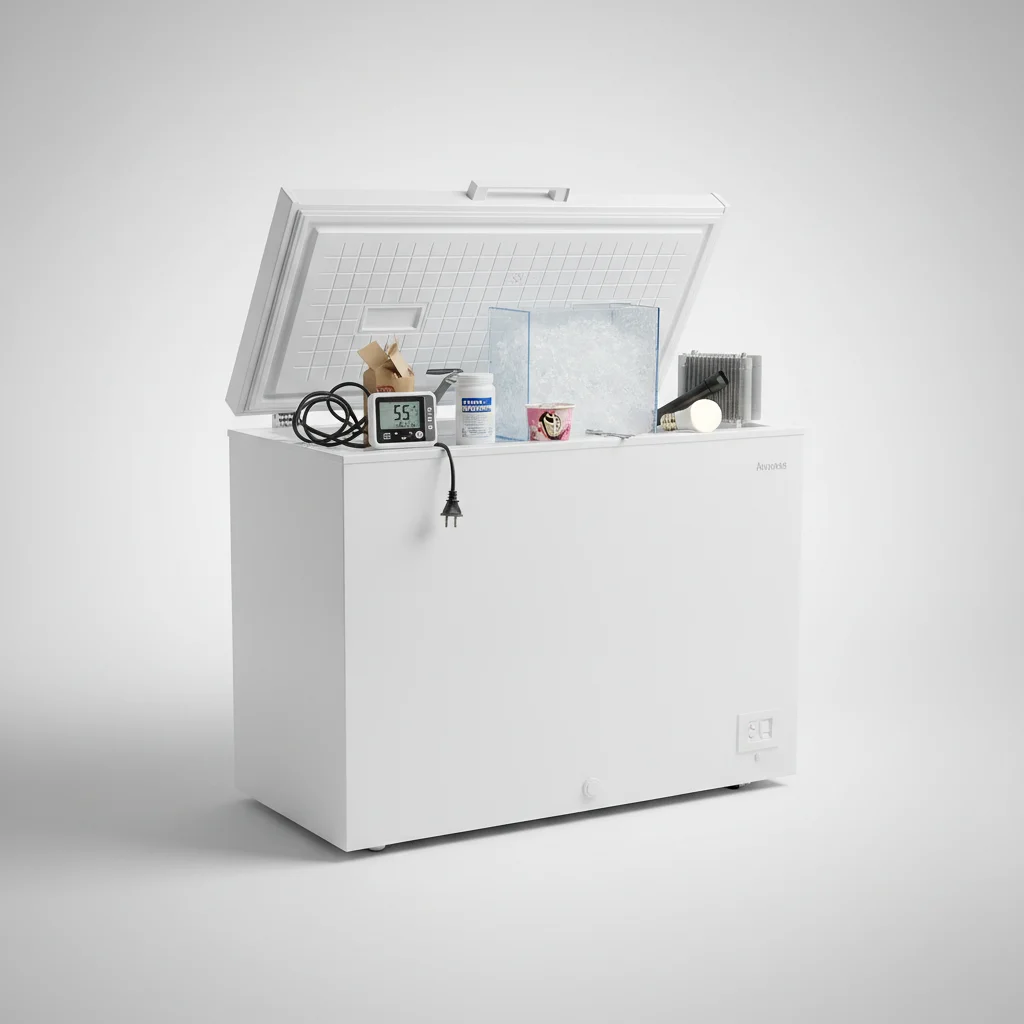
When a chest freezer isn’t working as expected, it’s often due to one of five common issues: power supply problems, temperature fluctuations, excessive frost buildup, unusual noises, or component failures. Addressing these problems promptly can prevent food spoilage and save repair costs. This guide outlines how to diagnose and resolve the most frequent issues to restore your freezer’s optimal performance.
Understanding Power Supply Problems
A lack of power is a straightforward issue to troubleshoot. If your chest freezer isn’t turning on, first check if it’s securely plugged into a working electrical outlet. Test the outlet with another appliance to confirm it’s receiving power. A tripped circuit breaker or a blown fuse can also be the cause; check your home’s electrical panel and reset any tripped breakers or replace blown fuses. Additionally, inspect the power cord for visible damage like cuts or fraying that could interrupt electrical flow.
Diagnosing Temperature Fluctuations
If your chest freezer runs but fails to maintain the correct temperature, several factors may be involved. Verify the thermostat is set to the recommended temperature, typically around 0°F (-18°C). An overloaded freezer can impede proper air circulation, creating warmer areas; avoid packing items too tightly. A faulty door seal is another common cause of temperature issues. Inspect the gasket around the door for cracks, tears, or gaps. A simple test involves closing the door on a piece of paper; if the paper pulls out easily, the seal likely needs replacement.
Addressing Excessive Frost Buildup
|
Our Picks for the Best Chest Freezer in 2026
As an Amazon Associate I earn from qualifying purchases.
|
||
| Num | Product | Action |
|---|---|---|
| 1 | Chest Freezer Small Deep Freezer 3.5 Cu.Ft Mini Freezer with Removable Baskets & 6 Adjustable Temperature (Down to -11°F)& Top Open Door, Mini Compact Freezer Suitable for Apartments, Kitchen, White |

|
| 2 | Avanti Upright Freezer Compact Design with 3 Fixed Metal Shelves, Reversible Door Adjustable Temperature Control and Flush-Back Design Perfect for Home, Office, Basements & More, 2.8-Cu.Ft, White |
|
| 3 | BLACK+DECKER 1.2 Cu. Ft. Compact Upright Freezer, Mini Deep Freeze with Full-Width Wire Shelf |
|
| 4 | Whynter Upright Small Freezer Mini Freezer with Lock for Bedrooms, Dorms, Garages, Offices CUF-110B, Black Energy Star, 1.1 Cu Ft |
|
| 5 | Koolatron Deep Freezer - 3.5 Cubic Feet, White Chest Freezer, 1 Wire Basket, Garage Ready, Meat Storage, Front Drain, Congelador For Home, Apartment, Basement, Dorm, Cottage, Manual Defrost, Stand Up |
|
| 6 | SPT UF-114W Upright Freezer, White, 1.1 Cubic Feet |
|
| 7 | Commercial Solid Top Chest Freezer by Atosa |
|
| 8 | 2 Pack Refrigerator Thermometer, 30-30°C/20-80°F, Classic Fridge Thermometer Large Dial with Red Indicator Thermometer for Freezer Refrigerator Cooler |
|
| 9 | Koolatron 1.2 Cubic Feet Capacity White Upright freezer - 1 wired shelf, Garage Ready, Meat Storage, Manual Defrost, Space Saving, Congelador For Home, Apartment, Basement, Dorm, Room |
|
| 10 | BESTYASH Freezer Organizer Divider Adjustable Chest Freezer Organizer with Breathable Layered Mesh for Refrigerator and Freezer Food and Beverage Storage 15.9X15.9X12.6 Inches |
|
Excessive frost buildup reduces freezer efficiency and storage capacity. This often results from warm, moist air entering the freezer, which can occur due to a frequently opened lid, a faulty door seal, or high room humidity. Regular defrosting is crucial. If frost quickly reappears after defrosting, re-examine the door seal for leaks. If the freezer is in a damp area, such as a basement, a dehumidifier can help reduce frost formation. Ensure all food items are properly sealed before freezing to minimize moisture release.
Troubleshooting Unusual Noises
While chest freezers typically emit a low hum, unusual noises signal a problem. A rattling sound might indicate the freezer isn’t level, causing internal components to vibrate; adjusting the leveling feet can often fix this. A louder-than-usual buzzing or humming could point to a failing compressor or condenser fan. A clicking sound might be the start relay attempting to engage the compressor. These issues often require professional attention, as they involve internal mechanical components. Before calling a technician, ensure nothing obstructs the fan blades or vibrates against the freezer’s exterior.
When to Call a Professional
Many chest freezer issues are resolvable with basic troubleshooting, but some require professional intervention. If you’ve checked power, temperature settings, and seals, and the freezer still malfunctions, or if you suspect problems with the compressor, condenser, or refrigerant, contact a qualified appliance technician. Attempting complex repairs without proper training and tools can be dangerous and may void your warranty. A professional can accurately diagnose and safely repair these components, ensuring long-term efficient operation.
- Check power cord and outlet for functionality.
- Inspect door gasket for any tears or gaps.
- Ensure thermostat is set to 0°F (-18°C).
- Defrost freezer regularly to prevent ice buildup.
- Listen for unusual noises and identify their source.
Frequently Asked Questions
What are the most common reasons a chest freezer stops working?
The most common reasons a chest freezer stops working include power supply issues, incorrect temperature settings, a faulty door seal, excessive frost buildup, or internal component failures like a failing compressor. Checking the power source and thermostat setting are initial diagnostic steps.
How do I check if my chest freezer's power supply is working?
To check the power supply, ensure the freezer is securely plugged into a functional electrical outlet. Test the outlet with another appliance to confirm it has power. Also, inspect your home's electrical panel for any tripped circuit breakers or blown fuses and reset or replace them as needed.
What temperature should a chest freezer be set to for optimal food preservation?
For optimal food preservation and efficiency, a chest freezer should typically be set to 0u00b0F (-18u00b0C). Maintaining this temperature prevents bacterial growth and preserves the quality of frozen foods for extended periods.
Why does my chest freezer have so much frost buildup inside?
Excessive frost buildup in a chest freezer is usually caused by warm, moist air entering the unit. This can happen if the lid is opened frequently, the door seal is faulty, or if the ambient humidity in the room is high. Regularly defrosting and checking the door seal can mitigate this.
When should I call a professional for chest freezer repair?
You should call a professional for chest freezer repair if basic troubleshooting steps like checking power, temperature settings, and seals don't resolve the issue. Professional intervention is also necessary for problems involving the compressor, condenser, or refrigerant, as these require specialized tools and expertise.
Troubleshoot Common Chest Freezer Issues
This guide provides actionable steps to diagnose and resolve common problems with chest freezers, helping you restore optimal performance and prevent food spoilage.
Ensure the freezer is securely plugged into a working outlet. Test the outlet with another appliance and check your home's circuit breaker or fuse box for tripped breakers or blown fuses. Inspect the power cord for any visible damage.
Confirm the thermostat is set to 0u00b0F (-18u00b0C). Inspect the door gasket for cracks or gaps; a simple paper test can reveal a faulty seal. Avoid overloading the freezer to allow proper air circulation.
Regularly defrost your freezer to prevent excessive ice. If frost returns quickly, re-examine the door seal and consider using a dehumidifier if the freezer is in a damp environment. Ensure all food items are properly sealed.
Listen for rattling, buzzing, or clicking sounds. Adjust leveling feet if rattling occurs. Check for obstructions around fan blades. Louder or persistent noises may indicate a failing compressor or fan, potentially requiring professional help.

I’ve been dealing with excessive frost buildup for weeks, and I thought my freezer was just old. The tips here about checking the door seal and not overfilling it really helped. I cleaned the seal thoroughly and rearranged some items, and the frost is definitely less now. Still a bit of a hassle, but much better than before.
This guide was a lifesaver! My chest freezer suddenly stopped working, and I was panicking about all the food. Turns out, it was just a tripped circuit breaker, exactly like the post mentioned. I checked my electrical panel, flipped it back on, and everything’s running perfectly now. So glad I didn’t call a repairman for something so simple!
I had a scare with my freezer not getting cold enough, and I was worried about food spoilage. Following the advice on temperature fluctuations, I adjusted the thermostat a tiny bit and made sure the coils were clean. Within a few hours, it was back to its optimal temperature. Great, practical advice that saved my frozen goods!
My freezer has been making some weird noises lately, a kind of humming that’s louder than usual. I tried the suggestions about checking if it’s level and clearing space around it, but it’s still pretty noisy. It’s not a dealbreaker, but I was hoping for a quick fix. Might need to look into a professional for this one.