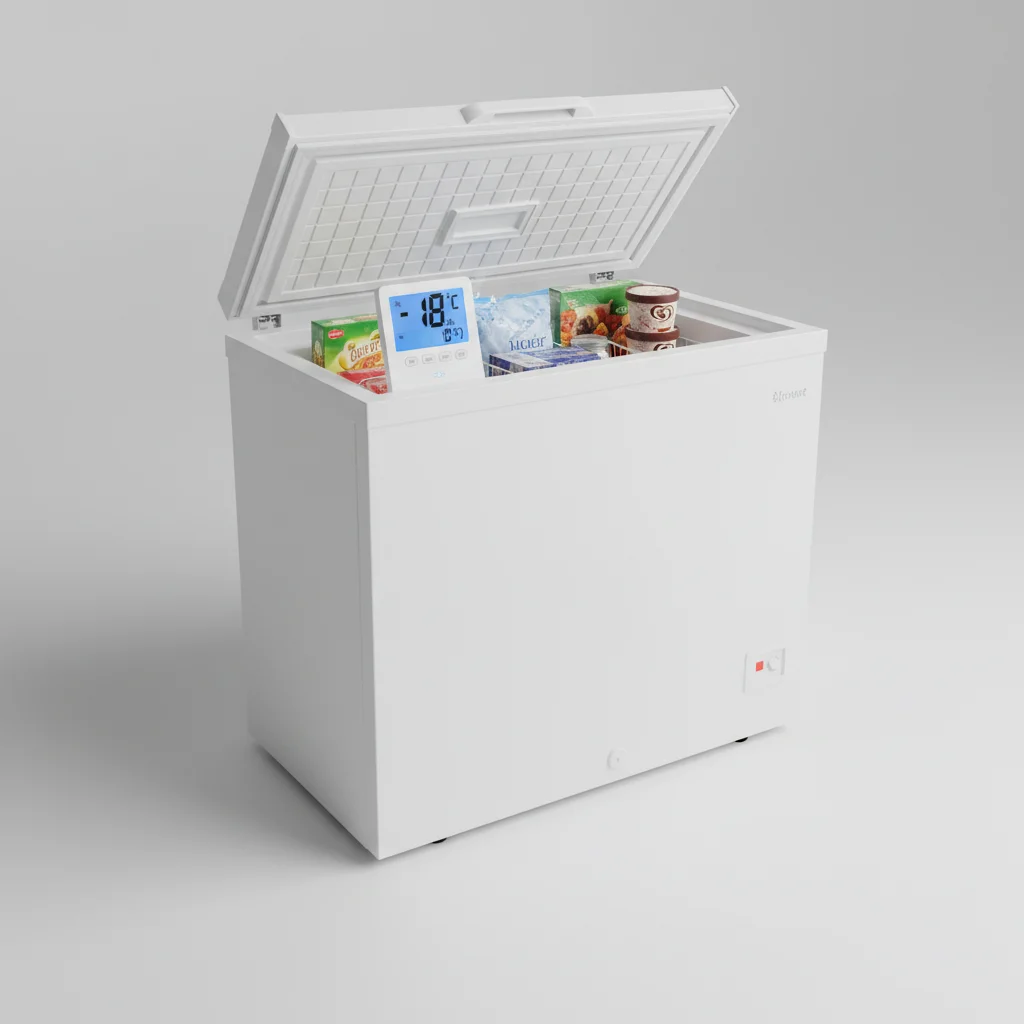
The ideal temperature for a chest freezer is 0°F (-18°C) or colder. Maintaining this specific temperature is crucial for ensuring the safety and quality of your frozen foods, preventing bacterial growth, and preserving nutrients over extended periods. Any temperature above 0°F can compromise food safety and lead to freezer burn or spoilage.
Why 0°F is the Standard for Freezing
Maintaining a consistent temperature of 0°F (-18°C) is the universally recommended standard for freezing food. At this temperature, the growth of microorganisms, including bacteria, yeasts, and molds, is effectively halted. While freezing doesn’t kill all bacteria, it renders them inactive, preventing spoilage and foodborne illnesses. This also significantly slows down enzymatic reactions that can degrade food quality, taste, and texture over time.
Fluctuations above this temperature, even for short periods, can lead to partial thawing and refreezing, which damages food at a cellular level, resulting in ice crystals, loss of moisture, and a decline in overall quality. For optimal long-term storage, a stable 0°F is non-negotiable.
Factors Affecting Internal Freezer Temperature
Several factors can influence the internal temperature of your chest freezer. The ambient room temperature where the freezer is located plays a significant role; a freezer in a hot garage will work harder to maintain its set temperature than one in a cool basement. How often you open the lid and for how long also impacts temperature stability, as warm air rushes in. The amount of food inside is another factor; a full freezer maintains its temperature more efficiently than an empty one, as the frozen items act as thermal mass. Finally, the condition of the door seal and the efficiency of the compressor are critical for consistent performance.
How to Monitor and Adjust Your Chest Freezer Temperature
|
Our Picks for the Best Chest Freezer in 2026
As an Amazon Associate I earn from qualifying purchases.
|
||
| Num | Product | Action |
|---|---|---|
| 1 | 2 Pack Refrigerator Thermometer, 30-30°C/20-80°F, Classic Fridge Thermometer Large Dial with Red Indicator Thermometer for Freezer Refrigerator Cooler |

|
| 2 | Whynter Upright Small Freezer Mini Freezer with Lock for Bedrooms, Dorms, Garages, Offices CUF-110B, Black Energy Star, 1.1 Cu Ft |
|
| 3 | Koolatron 1.2 Cubic Feet Capacity White Upright freezer - 1 wired shelf, Garage Ready, Meat Storage, Manual Defrost, Space Saving, Congelador For Home, Apartment, Basement, Dorm, Room |
|
| 4 | BESTYASH Freezer Organizer Divider Adjustable Chest Freezer Organizer with Breathable Layered Mesh for Refrigerator and Freezer Food and Beverage Storage 15.9X15.9X12.6 Inches |
|
| 5 | Commercial Solid Top Chest Freezer by Atosa |
|
| 6 | Avanti Upright Freezer Compact Design with 3 Fixed Metal Shelves, Reversible Door Adjustable Temperature Control and Flush-Back Design Perfect for Home, Office, Basements & More, 2.8-Cu.Ft, White |
|
| 7 | Chest Freezer Small Deep Freezer 3.5 Cu.Ft Mini Freezer with Removable Baskets & 6 Adjustable Temperature (Down to -11°F)& Top Open Door, Mini Compact Freezer Suitable for Apartments, Kitchen, White |
|
| 8 | BLACK+DECKER 1.2 Cu. Ft. Compact Upright Freezer, Mini Deep Freeze with Full-Width Wire Shelf |
|
| 9 | Koolatron Deep Freezer - 3.5 Cubic Feet, White Chest Freezer, 1 Wire Basket, Garage Ready, Meat Storage, Front Drain, Congelador For Home, Apartment, Basement, Dorm, Cottage, Manual Defrost, Stand Up |
|
| 10 | SPT UF-114W Upright Freezer, White, 1.1 Cubic Feet |
|
To accurately monitor your chest freezer’s temperature, use an appliance thermometer placed inside the freezer. Check it regularly, especially after adding a large amount of new food or if you suspect an issue. Most chest freezers have a dial or digital control to adjust the temperature. These controls typically range from 1 (warmest) to 7 (coldest) or display specific temperature settings. If your freezer is consistently too warm, try adjusting the dial one increment colder and recheck after 24 hours. Avoid making drastic changes at once.
- Place an appliance thermometer in the center of the freezer.
- Check the thermometer reading at least once a week.
- Adjust the temperature dial incrementally if needed.
- Wait 24 hours after adjustment to recheck the temperature.
- Ensure the lid seal is clean and free of cracks.
Troubleshooting Common Temperature Issues
If your chest freezer isn’t holding its temperature, start by checking the power supply and ensuring it’s plugged into a dedicated outlet. Inspect the lid gasket for any tears or gaps that could be letting in warm air; a simple dollar bill test can help identify leaks. If the bill pulls out easily when the lid is closed on it, the seal might be compromised. Overfilling the freezer can also impede air circulation, leading to warmer spots. Finally, ensure the condenser coils are clean and free of dust and debris, as dirty coils can reduce cooling efficiency. If these steps don’t resolve the issue, it might indicate a more serious mechanical problem requiring professional service.
For reliable temperature control, consider a model like the, known for its consistent performance and energy efficiency. It’s designed to maintain optimal freezing conditions even in varying ambient temperatures.
Maintaining Optimal Freezing Conditions
Beyond setting the correct temperature, several practices help maintain optimal freezing conditions. Avoid placing hot food directly into the freezer, as this raises the internal temperature and forces the compressor to work harder. Organize your freezer to allow for proper air circulation; don’t pack items too tightly against the walls or lid. Regularly defrosting your chest freezer, typically once or twice a year, prevents excessive ice buildup, which can reduce efficiency and take up valuable storage space. A well-maintained freezer not only preserves food better but also operates more energy-efficiently, saving you money on utility bills.
For those seeking advanced temperature monitoring and control, theoffers smart features that alert you to temperature fluctuations, ensuring your food remains perfectly frozen.
Frequently Asked Questions
What is the best temperature to set a chest freezer?
The best temperature to set a chest freezer is 0u00b0F (-18u00b0C) or colder. This temperature effectively halts the growth of microorganisms and significantly slows enzymatic reactions, ensuring food safety and quality.
Why is 0u00b0F (-18u00b0C) considered the standard for freezing food?
0u00b0F (-18u00b0C) is the standard because it inactivates bacteria, yeasts, and molds, preventing spoilage and foodborne illnesses. This temperature also minimizes cellular damage from ice crystal formation, preserving food texture and taste.
How can I accurately check my chest freezer's internal temperature?
To accurately check your chest freezer's internal temperature, place an appliance thermometer in the center of the freezer. Check the reading regularly, ideally once a week, to ensure it remains at 0u00b0F or colder.
What factors can cause a chest freezer's temperature to fluctuate?
Several factors can cause temperature fluctuations, including ambient room temperature, how often the lid is opened, the amount of food stored inside, and the condition of the door seal. A full freezer generally maintains temperature more efficiently than an empty one.
How often should I defrost my chest freezer for optimal performance?
You should defrost your chest freezer typically once or twice a year. Regular defrosting prevents excessive ice buildup, which can reduce the freezer's efficiency and take up valuable storage space, ensuring better food preservation and energy savings.
How to Monitor and Adjust Your Chest Freezer Temperature
Learn how to accurately monitor and adjust the temperature of your chest freezer to ensure optimal food preservation and energy efficiency.
Place a dedicated appliance thermometer in the center of your chest freezer. This provides the most accurate reading of the internal temperature.
Check the thermometer reading at least once a week. This helps you identify any temperature fluctuations promptly, especially after adding new food.
If the temperature is consistently above 0u00b0F (-18u00b0C), adjust the freezer's dial or digital control one increment colder. Avoid making drastic changes to prevent over-cooling.
Wait 24 hours after making an adjustment before rechecking the temperature. This allows the freezer ample time to stabilize at the new setting.
Ensure the lid seal is clean and free of cracks or gaps. A compromised seal can allow warm air to enter, making the freezer work harder to maintain its set temperature.

Good info here. I’ve got a big family, so my chest freezer is always packed. I appreciate the emphasis on preventing bacterial growth at 0°F. My only minor complaint is that my older model freezer doesn’t have a super precise digital readout, so it’s a bit of a guessing game to hit exactly -18°C, but I’m doing my best with an external thermometer.
This was super helpful! I just bought a new chest freezer for bulk buying, and I wanted to make sure I was setting it up correctly. The explanation about why 0°F is the standard for halting microorganisms makes perfect sense. I feel much more confident now that my frozen meals and produce will stay fresh and safe for longer.
I’ve had my chest freezer for years, and I usually keep it around -5°F. While I agree that colder is better for food quality, I’ve found that sometimes my ice cream gets too hard at exactly 0°F. It’s a minor thing, but I do like my ice cream scoopable. Still, the points about preventing freezer burn are valid, and I’ll try to stick closer to the recommended setting for everything else.
I’ve always wondered about the best temperature for my chest freezer, and this really cleared things up. I used to keep mine a little warmer, around 5°F, thinking it saved energy. Now I’ve adjusted it to 0°F, and I can already tell a difference in how well my meat and veggies are preserving. No more ice crystals forming on my frozen berries!