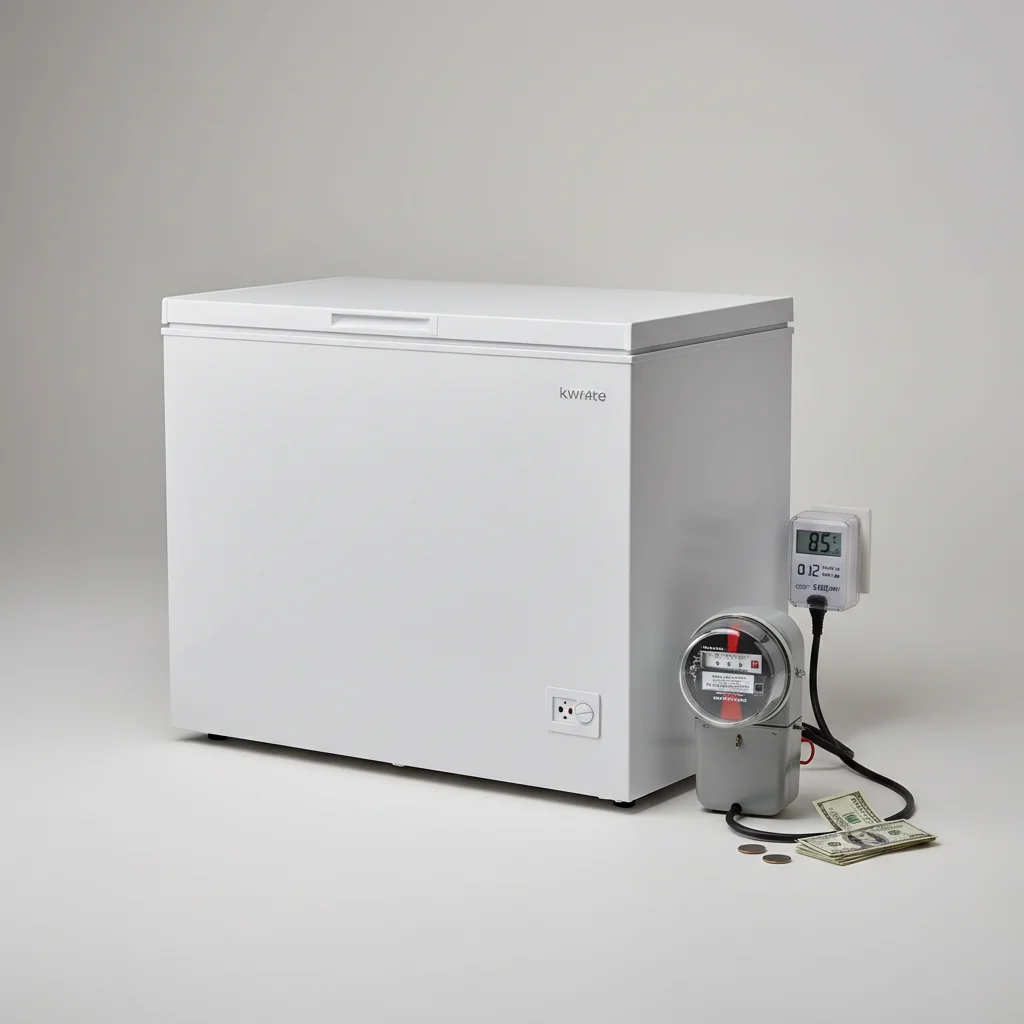
On average, a modern chest freezer uses between 100 to 200 kWh of electricity per year, resulting in an annual operating cost of approximately $12 to $24. This cost depends on local electricity rates, the unit’s size, and its energy efficiency. Factors like ambient temperature, how often the lid is opened, and the freezer’s age and Energy Star rating also influence power consumption.
Factors Influencing Power Usage
Several key factors dictate how much electricity your chest freezer consumes. The most significant is its Energy Star rating; highly efficient models use considerably less power. Size also plays a role, with larger freezers generally requiring more energy to cool their greater internal volume. Ambient room temperature is another critical factor; a freezer in a hot garage will work harder and consume more electricity than one in a cool basement. Furthermore, the frequency of opening the lid and the amount of food stored inside can impact energy use, as the freezer has to work to restore lost cold air. For see our chest freezer recommendations on this site.
Calculating Your Chest Freezer’s Annual Cost
To accurately estimate your chest freezer’s annual operating cost, you’ll need its wattage or kWh per year rating (usually found on the energy guide label) and your local electricity rate. For example, if your freezer uses 150 kWh per year and your electricity rate is $0.15 per kWh, your annual cost would be $22.50. Many utility companies offer online calculators or provide average rates for your area. It’s a simple calculation that can help you budget and identify potential savings.
- Locate the energy guide label on your freezer.
- Note the estimated annual kWh consumption.
- Find your local electricity rate (cents per kWh).
- Multiply kWh by the rate to get the annual cost.
- Consider peak vs. off-peak rates for more accuracy.
Tips for Reducing Energy Consumption
|
Our Picks for the Best Chest Freezer in 2026
As an Amazon Associate I earn from qualifying purchases.
|
||
| Num | Product | Action |
|---|---|---|
| 1 | Koolatron 1.2 Cubic Feet Capacity White Upright freezer - 1 wired shelf, Garage Ready, Meat Storage, Manual Defrost, Space Saving, Congelador For Home, Apartment, Basement, Dorm, Room |

|
| 2 | Chest Freezer Small Deep Freezer 3.5 Cu.Ft Mini Freezer with Removable Baskets & 6 Adjustable Temperature (Down to -11°F)& Top Open Door, Mini Compact Freezer Suitable for Apartments, Kitchen, White |
|
| 3 | BLACK+DECKER 1.2 Cu. Ft. Compact Upright Freezer, Mini Deep Freeze with Full-Width Wire Shelf |
|
| 4 | Avanti Upright Freezer Compact Design with 3 Fixed Metal Shelves, Reversible Door Adjustable Temperature Control and Flush-Back Design Perfect for Home, Office, Basements & More, 2.8-Cu.Ft, White |
|
| 5 | SPT UF-114W Upright Freezer, White, 1.1 Cubic Feet |
|
| 6 | Whynter Upright Small Freezer Mini Freezer with Lock for Bedrooms, Dorms, Garages, Offices CUF-110B, Black Energy Star, 1.1 Cu Ft |
|
| 7 | 2 Pack Refrigerator Thermometer, 30-30°C/20-80°F, Classic Fridge Thermometer Large Dial with Red Indicator Thermometer for Freezer Refrigerator Cooler |
|
| 8 | Commercial Solid Top Chest Freezer by Atosa |
|
| 9 | BESTYASH Freezer Organizer Divider Adjustable Chest Freezer Organizer with Breathable Layered Mesh for Refrigerator and Freezer Food and Beverage Storage 15.9X15.9X12.6 Inches |
|
| 10 | Koolatron Deep Freezer - 3.5 Cubic Feet, White Chest Freezer, 1 Wire Basket, Garage Ready, Meat Storage, Front Drain, Congelador For Home, Apartment, Basement, Dorm, Cottage, Manual Defrost, Stand Up |
|
There are several practical steps you can take to minimize your chest freezer’s power consumption. First, ensure the freezer is placed in a cool, well-ventilated area, away from direct sunlight or heat sources. Regularly defrosting the unit prevents ice buildup, which can reduce efficiency. Checking the door seal for any gaps or cracks is also important, as a poor seal allows cold air to escape. Finally, avoid overfilling or underfilling the freezer; a full freezer runs more efficiently, but proper air circulation is still necessary.
Consider upgrading to a newer, more energy-efficient model if your current freezer is old. Modern freezers are designed with advanced insulation and compressor technology that significantly reduces power draw. While the initial investment might be higher, the long-term savings on your electricity bill can be substantial.Many manufacturers now offer smart features that further optimize energy use based on your habits.
Understanding Energy Star Ratings
The Energy Star program, a joint initiative of the U.S. Environmental Protection Agency and the U.S. Department of Energy, helps consumers identify energy-efficient products. A chest freezer with an Energy Star rating is certified to meet strict energy efficiency guidelines, meaning it consumes less electricity than conventional models. These ratings are a reliable indicator of a product’s long-term operating cost and environmental impact. When purchasing a new freezer, prioritizing an Energy Star-certified model is a smart financial and ecological choice.Always compare the annual energy consumption figures provided on the yellow EnergyGuide label.
Frequently Asked Questions
How much electricity does a chest freezer use annually?
A modern chest freezer typically uses between 100 to 200 kWh of electricity per year. This consumption translates to an average annual operating cost of $12 to $24, depending on local electricity rates and the specific model's efficiency.
What factors affect a chest freezer's energy usage?
Several factors influence a chest freezer's energy usage, including its Energy Star rating, physical size, and the ambient room temperature where it's located. How often the lid is opened and the amount of food stored inside also play a role in its power consumption.
How can I calculate my chest freezer's annual operating cost?
To calculate your chest freezer's annual operating cost, locate its estimated annual kWh consumption on the EnergyGuide label. Then, multiply this kWh figure by your local electricity rate (cents per kWh). For example, 150 kWh at $0.15/kWh equals $22.50 annually.
What are effective ways to reduce chest freezer energy consumption?
To reduce energy consumption, place your chest freezer in a cool, well-ventilated area away from heat sources. Regularly defrost the unit to prevent ice buildup, ensure the door seal is airtight, and keep the freezer adequately filled for optimal efficiency.
Why is an Energy Star rating important for chest freezers?
An Energy Star rating indicates that a chest freezer meets strict energy efficiency guidelines set by the U.S. EPA and DOE. These certified models consume less electricity than conventional units, leading to lower long-term operating costs and reduced environmental impact.
Calculate Your Chest Freezer's Annual Cost
Estimate your chest freezer's annual operating cost by using its energy consumption and your local electricity rate.
Find the yellow Energy Guide label on your chest freezer. This label provides important information about the appliance's energy efficiency.
On the Energy Guide label, identify the estimated annual kWh consumption. This number represents how much electricity the freezer is expected to use in a year.
Determine your local electricity rate, typically measured in cents or dollars per kWh. You can usually find this information on your utility bill or your electricity provider's website.
Multiply the annual kWh consumption by your local electricity rate. The result will be your estimated annual operating cost for the chest freezer.

I was really worried about adding a chest freezer to my garage because of the electricity bill, but after reading up on the Energy Star ratings, I decided to go for it. I got a smaller, highly efficient model, and honestly, I haven’t noticed a huge jump in my monthly costs. It’s been great for buying meat in bulk and saving money that way.
I’ve had my chest freezer for about five years now, and it’s still running strong. I always make sure it’s not too full and that the seals are good, which I learned helps with efficiency. It’s definitely worth the investment, especially when you consider how much you save by stocking up on sales. The power usage is totally reasonable for the convenience.
This was super helpful in understanding why my old freezer was costing so much. I didn’t realize how much the ambient temperature in my basement was affecting its power consumption. I’m planning to move it to a cooler spot and see if that makes a difference before I invest in a brand new one. Good to know what to look for next time.
I bought a medium-sized chest freezer last year, and while it’s great for extra storage, I was a bit disappointed with the actual operating cost. It seems to be on the higher end of the $12 to $24 annual estimate, even though I thought I was being careful. I probably open the lid more often than I should, which might be part of the problem.