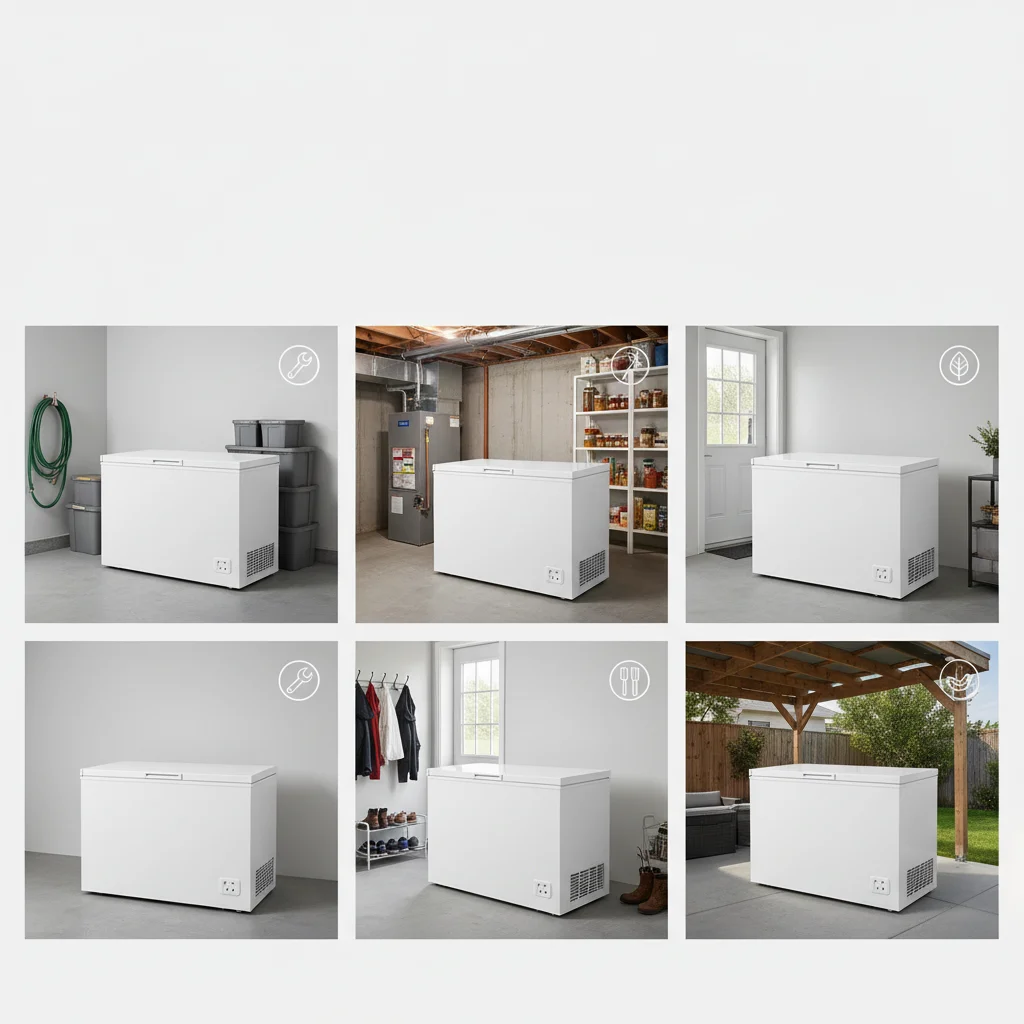
The best spot for a chest freezer is a cool, dry, and well-ventilated area, ideally between 0°F and 110°F (-17°C and 43°C), with a minimum of 3 inches of clearance around all sides for proper airflow. This optimal placement maximizes efficiency and extends the appliance’s lifespan by preventing the compressor from overworking, which leads to lower energy consumption and consistent freezing temperatures.
Understanding Environmental Factors
The environment surrounding your chest freezer significantly impacts its performance. High ambient temperatures force the compressor to run more frequently and for longer durations, increasing energy usage and wear. Conversely, extremely cold environments can also be problematic for some models, potentially causing the thermostat to malfunction and the freezer to not cycle on when needed. A stable, moderate temperature is always preferred. For expert chest freezer reviews on this site.
Humidity is another critical factor. High humidity can lead to condensation buildup on the exterior and interior of the freezer, potentially causing rust, mold, and increased frost accumulation inside. Ensure the chosen location is dry to prevent these issues and maintain the integrity of your appliance.
Ideal Locations for Your Chest Freezer
Common ideal locations include basements, garages (especially insulated ones), and utility rooms. Basements often provide a naturally cooler and more stable temperature environment. Garages can be suitable if they are not subject to extreme temperature fluctuations throughout the year. Utility rooms, if spacious enough and well-ventilated, also offer a good option. Avoid placing the freezer in direct sunlight or near heat sources like ovens, radiators, or water heaters.
- Basements: Naturally cool and stable temperatures.
- Insulated Garages: Good if protected from extreme heat/cold.
- Utility Rooms: Often dry and can be well-ventilated.
- Pantry: If large enough and not prone to heat.
- Dedicated Storage Room: Best for controlled environments.
Clearance and Ventilation Requirements
|
Our Picks for the Best Chest Freezer in 2026
As an Amazon Associate I earn from qualifying purchases.
|
||
| Num | Product | Action |
|---|---|---|
| 1 | Avanti Upright Freezer Compact Design with 3 Fixed Metal Shelves, Reversible Door Adjustable Temperature Control and Flush-Back Design Perfect for Home, Office, Basements & More, 2.8-Cu.Ft, White |

|
| 2 | Koolatron Deep Freezer - 3.5 Cubic Feet, White Chest Freezer, 1 Wire Basket, Garage Ready, Meat Storage, Front Drain, Congelador For Home, Apartment, Basement, Dorm, Cottage, Manual Defrost, Stand Up |
|
| 3 | BESTYASH Freezer Organizer Divider Adjustable Chest Freezer Organizer with Breathable Layered Mesh for Refrigerator and Freezer Food and Beverage Storage 15.9X15.9X12.6 Inches |
|
| 4 | Whynter Upright Small Freezer Mini Freezer with Lock for Bedrooms, Dorms, Garages, Offices CUF-110B, Black Energy Star, 1.1 Cu Ft |
|
| 5 | Commercial Solid Top Chest Freezer by Atosa |
|
| 6 | BLACK+DECKER 1.2 Cu. Ft. Compact Upright Freezer, Mini Deep Freeze with Full-Width Wire Shelf |
|
| 7 | Koolatron 1.2 Cubic Feet Capacity White Upright freezer - 1 wired shelf, Garage Ready, Meat Storage, Manual Defrost, Space Saving, Congelador For Home, Apartment, Basement, Dorm, Room |
|
| 8 | Chest Freezer Small Deep Freezer 3.5 Cu.Ft Mini Freezer with Removable Baskets & 6 Adjustable Temperature (Down to -11°F)& Top Open Door, Mini Compact Freezer Suitable for Apartments, Kitchen, White |
|
| 9 | SPT UF-114W Upright Freezer, White, 1.1 Cubic Feet |
|
| 10 | 2 Pack Refrigerator Thermometer, 30-30°C/20-80°F, Classic Fridge Thermometer Large Dial with Red Indicator Thermometer for Freezer Refrigerator Cooler |
|
Proper airflow around your chest freezer is non-negotiable for efficient operation. A minimum of 3 inches of space on all sides (back, sides, and top) allows heat generated by the compressor and condenser coils to dissipate effectively. Without adequate clearance, heat gets trapped, forcing the compressor to work harder, which can lead to premature failure and higher electricity bills. Ensure no objects are blocking the vents or the back of the unit.
Consider the flooring as well. The freezer should be placed on a level, sturdy surface that can support its weight when full. Uneven surfaces can cause the compressor to vibrate excessively, leading to noise and potential damage over time. Using a leveling tool can help ensure stability.
Electrical Considerations and Safety
Always plug your chest freezer into a dedicated, grounded electrical outlet. Avoid using extension cords, especially thin or ungrounded ones, as they can pose a fire hazard and may not provide sufficient power, leading to compressor strain. If an extension cord is absolutely necessary, use a heavy-duty, outdoor-rated cord specifically designed for appliances, and ensure it is as short as possible.
Regularly inspect the power cord for any signs of damage. Keep the area around the plug and outlet clear of obstructions. For safety, especially if children are present, consider securing the freezer lid and ensuring the unit is stable and cannot be easily tipped over.
Long-Term Maintenance and Monitoring
Once your chest freezer is in its optimal location, regular monitoring and maintenance are key. Periodically check the temperature inside with an external thermometer to ensure it’s maintaining the ideal range of 0°F (-18°C). Clean the condenser coils at least once a year to remove dust and debris, which can impede heat dissipation. This simple task can significantly improve efficiency and longevity.
Also, pay attention to any unusual noises or excessive heat coming from the compressor area. These could be indicators of an underlying issue that needs addressing. By choosing the right placement and adhering to these maintenance tips, you can ensure your chest freezer operates efficiently for many years, saving you money on energy bills and protecting your frozen goods.
Frequently Asked Questions
What is the ideal temperature range for a chest freezer's location?
The ideal temperature range for a chest freezer's location is between 0u00b0F and 110u00b0F (-17u00b0C and 43u00b0C). Maintaining this range prevents the compressor from overworking or malfunctioning, ensuring consistent freezing and lower energy consumption.
How much clearance does a chest freezer need for proper ventilation?
A chest freezer requires a minimum of 3 inches of clearance on all sides (back, sides, and top) for proper ventilation. This space allows heat generated by the compressor and condenser coils to dissipate effectively, preventing premature failure and higher electricity bills.
Can a chest freezer be placed in a garage or basement?
Yes, basements and insulated garages are often ideal locations for chest freezers. Basements typically offer naturally cooler and more stable temperatures, while insulated garages protect the unit from extreme temperature fluctuations.
Why is it important to avoid using extension cords with chest freezers?
It is important to avoid using extension cords with chest freezers because they can pose a fire hazard and may not provide sufficient power. This can lead to compressor strain and potential damage to the appliance. Always use a dedicated, grounded electrical outlet.
How often should chest freezer condenser coils be cleaned?
Chest freezer condenser coils should be cleaned at least once a year. This removes dust and debris that can impede heat dissipation, significantly improving the freezer's efficiency and extending its operational longevity.
How to Choose the Best Spot for Your Chest Freezer
Selecting the optimal location for your chest freezer involves considering environmental factors, clearance, and electrical safety to ensure efficiency and longevity.
Choose a cool, dry, and well-ventilated area with ambient temperatures between 0u00b0F and 110u00b0F (-17u00b0C and 43u00b0C). Avoid direct sunlight, high humidity, and proximity to heat sources like ovens or radiators to prevent compressor strain and condensation.
Provide a minimum of 3 inches of space around all sides (back, sides, and top) of the freezer. This allows for proper airflow, enabling the compressor and condenser coils to dissipate heat effectively and operate efficiently.
Plug the chest freezer into a dedicated, grounded electrical outlet. Avoid using extension cords; if absolutely necessary, use a heavy-duty, outdoor-rated appliance cord that is as short as possible to prevent fire hazards and compressor strain.
Place the freezer on a level, sturdy surface capable of supporting its full weight. An uneven surface can cause excessive compressor vibration, leading to noise and potential damage over time. Use a leveling tool for stability.
Once placed, periodically check the internal temperature with an external thermometer to ensure it maintains 0u00b0F (-18u00b0C). Clean condenser coils annually to remove dust, which significantly improves efficiency and extends the freezer's lifespan.

I’m so glad I read this before moving my new chest freezer! I was about to put it in the garage, but after seeing the advice about stable, moderate temperatures, I decided to clear out a spot in my basement instead. It’s much cooler and drier down there. I’ve noticed it runs really quietly and keeps everything perfectly frozen without any issues.
I tried to follow the advice about keeping it in a cool spot, but my only option was the garage, which gets pretty warm in the summer. It still works, but I can tell the compressor kicks on more often than I’d like. I wish I had more space inside the house for it. The temperature range mentioned, 0°F to 110°F, is helpful to know though.
Good tips here. I always knew clearance was important, but the 3 inches around all sides really stuck with me. I made sure to measure and give my freezer plenty of breathing room. It’s been running efficiently, and I haven’t seen any frost buildup, which is a huge plus for me. Definitely helps keep the energy bill down.
This was super helpful! I had my old freezer crammed into a corner, and it always seemed to be working overtime. When I got my new one, I made sure to give it ample space, especially considering the humidity factor. It’s in a well-ventilated area now, and I’m confident it will last much longer and save me money on electricity.