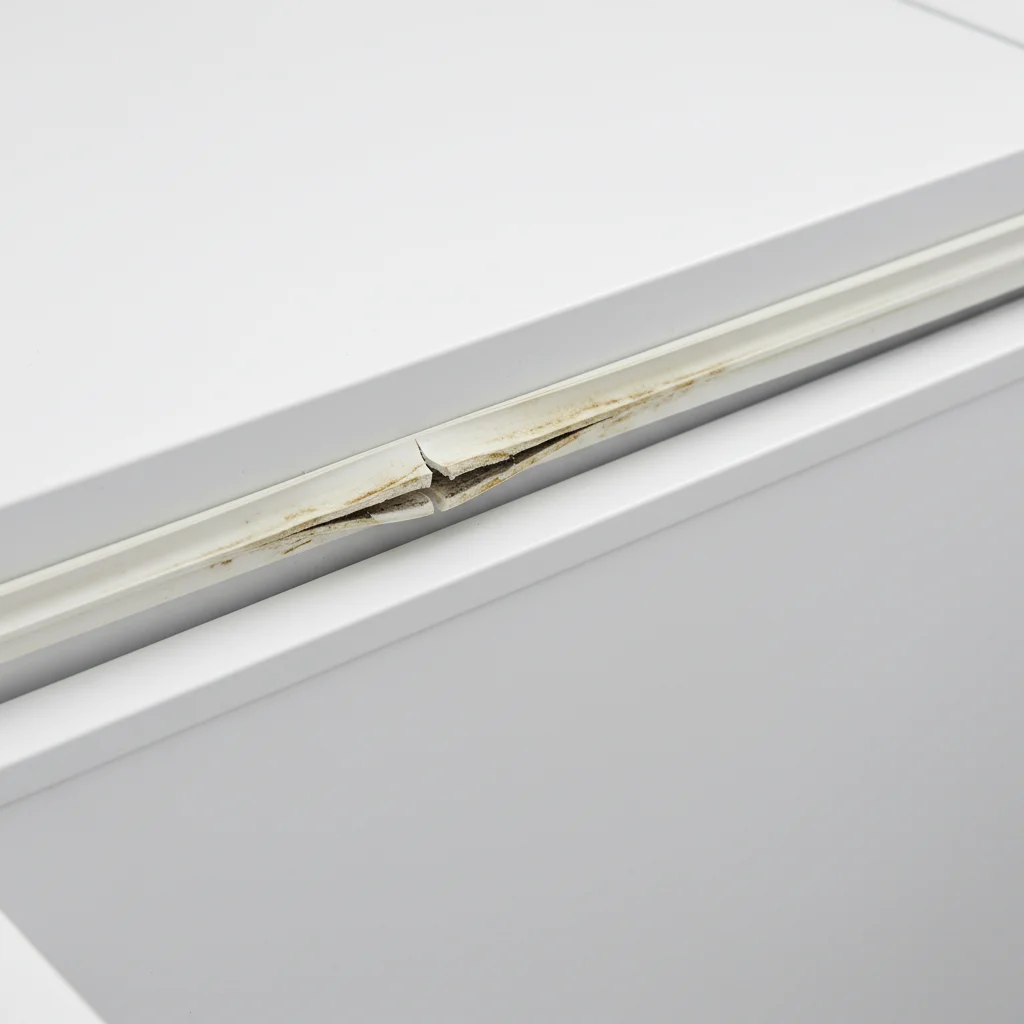
You should replace your chest freezer gasket if you notice any of these five key signs: visible cracks or tears, a loss of suction when closing the lid, frost buildup around the seal, an unusually warm exterior near the gasket, or a noticeable increase in your electricity bill. A failing chest freezer gasket can lead to significant energy waste and compromised food safety, making prompt replacement essential for efficient operation and proper food preservation.
Visible Damage to the Gasket
The most straightforward indicator of a failing gasket is visible damage. Inspect the rubber or vinyl seal around the perimeter of your chest freezer’s lid for cracks, tears, hardening, or areas where the material has become brittle. Over time, exposure to temperature fluctuations and regular wear and tear can degrade the gasket’s integrity. Even small nicks can create pathways for warm air to enter, reducing the freezer’s efficiency. Run your hand along the entire gasket to feel for any irregularities that might not be immediately visible.
Loss of Suction or Poor Seal
A healthy chest freezer gasket creates a tight, airtight seal when the lid is closed. You should feel a slight resistance or suction when opening the lid, indicating that the seal is working effectively. If the lid opens too easily, or if you can slide a piece of paper between the lid and the freezer body when it’s closed, the gasket is likely failing. This loss of suction allows cold air to escape and warm, humid air to enter, forcing the compressor to work harder and consume more energy. A simple test involves closing the lid on a dollar bill; if you can pull it out easily, the seal is compromised.
Excessive Frost Buildup Around the Seal
|
Our Picks for the Best Chest Freezer in 2026
As an Amazon Associate I earn from qualifying purchases.
|
||
| Num | Product | Action |
|---|---|---|
| 1 | SPT UF-114W Upright Freezer, White, 1.1 Cubic Feet |

|
| 2 | BESTYASH Freezer Organizer Divider Adjustable Chest Freezer Organizer with Breathable Layered Mesh for Refrigerator and Freezer Food and Beverage Storage 15.9X15.9X12.6 Inches |
|
| 3 | Whynter Upright Small Freezer Mini Freezer with Lock for Bedrooms, Dorms, Garages, Offices CUF-110B, Black Energy Star, 1.1 Cu Ft |
|
| 4 | Koolatron Deep Freezer - 3.5 Cubic Feet, White Chest Freezer, 1 Wire Basket, Garage Ready, Meat Storage, Front Drain, Congelador For Home, Apartment, Basement, Dorm, Cottage, Manual Defrost, Stand Up |
|
| 5 | Avanti Upright Freezer Compact Design with 3 Fixed Metal Shelves, Reversible Door Adjustable Temperature Control and Flush-Back Design Perfect for Home, Office, Basements & More, 2.8-Cu.Ft, White |
|
| 6 | BLACK+DECKER 1.2 Cu. Ft. Compact Upright Freezer, Mini Deep Freeze with Full-Width Wire Shelf |
|
| 7 | Koolatron 1.2 Cubic Feet Capacity White Upright freezer - 1 wired shelf, Garage Ready, Meat Storage, Manual Defrost, Space Saving, Congelador For Home, Apartment, Basement, Dorm, Room |
|
| 8 | 2 Pack Refrigerator Thermometer, 30-30°C/20-80°F, Classic Fridge Thermometer Large Dial with Red Indicator Thermometer for Freezer Refrigerator Cooler |
|
| 9 | Chest Freezer Small Deep Freezer 3.5 Cu.Ft Mini Freezer with Removable Baskets & 6 Adjustable Temperature (Down to -11°F)& Top Open Door, Mini Compact Freezer Suitable for Apartments, Kitchen, White |
|
| 10 | Commercial Solid Top Chest Freezer by Atosa |
|
Frost buildup inside a chest freezer is normal, but excessive frost specifically around the gasket area is a clear sign of an air leak. When warm, moist air from the outside enters the freezer, it condenses and freezes upon contact with the cold interior. This often manifests as a thick layer of ice or frost directly along the edges of the lid or inside the freezer near the gasket. This not only indicates a poor seal but also reduces usable storage space and can lead to freezer burn on your food.
Warm Spots on the Freezer Exterior
While the interior of your chest freezer should be consistently cold, the exterior should generally remain cool to the touch. If you notice specific areas on the outside of the freezer, particularly around the lid’s edge, that feel unusually warm, it could be due to a failing gasket. This warmth indicates that cold air is escaping and the compressor is overworking to maintain the internal temperature. The heat generated by the compressor’s continuous operation can radiate through the freezer walls, making the exterior feel warm. This is a subtle but important sign of inefficiency.
Increased Energy Bills
One of the most impactful, albeit indirect, signs of a failing chest freezer gasket is an unexplained increase in your electricity bill. When the gasket fails, the freezer’s compressor has to run more frequently and for longer durations to compensate for the constant influx of warm air. This continuous operation consumes significantly more electricity than a properly sealed unit. If you haven’t changed your usage habits but your energy costs have risen, a faulty gasket could be the culprit. Replacing the gasket can often lead to a noticeable reduction in energy consumption and savings on your utility bills.
- Inspect the gasket for any visible cracks, tears, or hardening.
- Perform the
Frequently Asked Questions
What are the main signs a chest freezer gasket needs replacing?
The main signs a chest freezer gasket needs replacing include visible cracks or tears, a loss of suction when closing the lid, excessive frost buildup around the seal, warm spots on the freezer exterior, and an unexplained increase in electricity bills.
How can I test if my chest freezer gasket has a good seal?
You can test the seal by closing the lid on a dollar bill. If you can pull the dollar bill out easily, the seal is compromised and the gasket is likely failing. A healthy gasket creates a tight, airtight seal with slight resistance when opening.
Does a bad chest freezer gasket increase electricity consumption?
Yes, a bad chest freezer gasket significantly increases electricity consumption. When the seal is compromised, the freezer's compressor must run more frequently and for longer durations to maintain the internal temperature, leading to higher energy bills.
Can a damaged gasket cause frost buildup inside my freezer?
A damaged gasket can cause excessive frost buildup, especially around the seal area. Warm, moist air entering through the compromised seal condenses and freezes upon contact with the cold interior, leading to ice accumulation and reduced efficiency.
What kind of visible damage should I look for on a freezer gasket?
You should look for visible damage such as cracks, tears, hardening, or areas where the rubber or vinyl material has become brittle. Even small nicks can compromise the seal and allow warm air to enter the freezer.

Good info here, but I wish there was more detail on how to actually replace the gasket. My freezer has some visible cracks and tears, and I’m not super handy. It would be helpful to have a step-by-step guide or a link to one. Still, it confirmed my suspicions about the problem.
Excellent advice! I was puzzled why my electricity bill had jumped so much recently, and I checked everything else. After reading this, I felt the exterior near the gasket and it was unusually warm. Definitely replacing the gasket now. This will save me a lot of money in the long run.
This was a really helpful breakdown. I hadn’t even considered the loss of suction when closing the lid as a sign, but now that I think about it, mine definitely doesn’t seal as tightly as it used to. It’s good to know these signs so I can prevent food spoilage and keep my frozen goods safe.
I’m so glad I read this! I’ve been noticing a lot more frost buildup around the seal of my old chest freezer lately, and I just thought it was normal. Now I know it’s a clear sign the gasket is failing. I’m going to order a replacement today to save on my electricity bill.