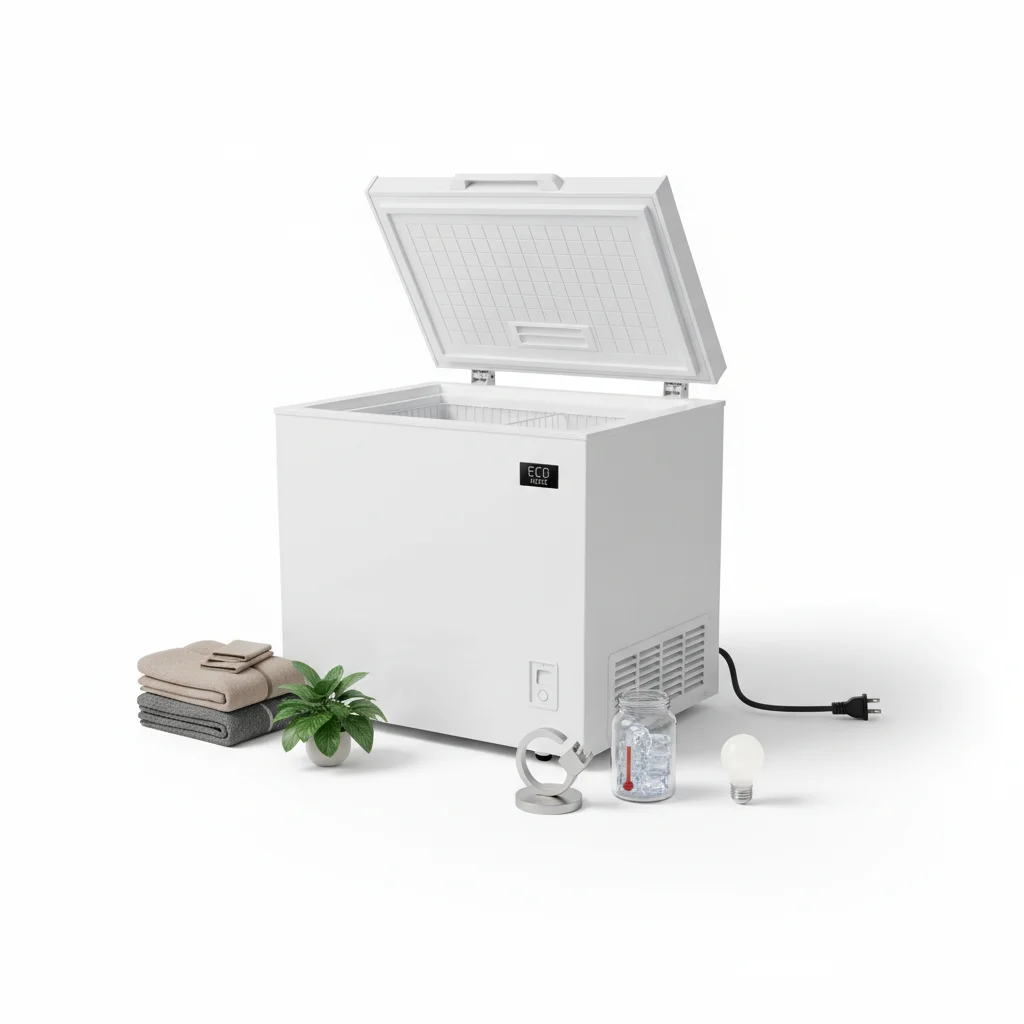
A standard chest freezer consumes between 100 to 250 kilowatt-hours (kWh) annually, costing approximately $12 to $30 per year, depending on local electricity rates and the unit’s efficiency. This operating cost is influenced by the freezer’s size, age, and Energy Star rating, with larger and older models typically using more power.
Factors Influencing Chest Freezer Energy Use
Several factors directly impact how much electricity your chest freezer uses. The most significant is the unit’s size; larger freezers naturally require more power to maintain their internal temperature. Older models, particularly those manufactured before energy efficiency standards were widely adopted, tend to be less efficient than newer, Energy Star-rated appliances. Ambient room temperature also plays a role; a freezer located in a hot garage will work harder and consume more energy than one in a cool basement.
Furthermore, how often you open the lid and the amount of food stored inside can affect energy consumption. A full freezer retains cold better than an empty one, reducing the compressor’s run time. Frequent opening allows warm air to enter, forcing the unit to expend more energy to cool back down.
Calculating Your Chest Freezer’s Annual Cost
To accurately calculate your chest freezer’s annual operating cost, you’ll need two pieces of information: the freezer’s annual kWh consumption (usually found on the EnergyGuide label) and your local electricity rate per kWh. For example, if your freezer uses 150 kWh per year and your electricity rate is $0.15 per kWh, your annual cost would be 150 kWh * $0.15/kWh = $22.50. This simple calculation helps you budget and identify potential savings.
It’s worth noting that electricity rates vary significantly by region and even by time of day in some areas. Checking your utility bill for the exact rate is the most reliable way to get an accurate estimate.
Tips for Reducing Energy Consumption
|
Our Picks for the Best Chest Freezer in 2026
As an Amazon Associate I earn from qualifying purchases.
|
||
| Num | Product | Action |
|---|---|---|
| 1 | Koolatron Deep Freezer - 3.5 Cubic Feet, White Chest Freezer, 1 Wire Basket, Garage Ready, Meat Storage, Front Drain, Congelador For Home, Apartment, Basement, Dorm, Cottage, Manual Defrost, Stand Up |

|
| 2 | Koolatron 1.2 Cubic Feet Capacity White Upright freezer - 1 wired shelf, Garage Ready, Meat Storage, Manual Defrost, Space Saving, Congelador For Home, Apartment, Basement, Dorm, Room |
|
| 3 | Avanti Upright Freezer Compact Design with 3 Fixed Metal Shelves, Reversible Door Adjustable Temperature Control and Flush-Back Design Perfect for Home, Office, Basements & More, 2.8-Cu.Ft, White |
|
| 4 | BESTYASH Freezer Organizer Divider Adjustable Chest Freezer Organizer with Breathable Layered Mesh for Refrigerator and Freezer Food and Beverage Storage 15.9X15.9X12.6 Inches |
|
| 5 | Whynter Upright Small Freezer Mini Freezer with Lock for Bedrooms, Dorms, Garages, Offices CUF-110B, Black Energy Star, 1.1 Cu Ft |
|
| 6 | Chest Freezer Small Deep Freezer 3.5 Cu.Ft Mini Freezer with Removable Baskets & 6 Adjustable Temperature (Down to -11°F)& Top Open Door, Mini Compact Freezer Suitable for Apartments, Kitchen, White |
|
| 7 | Commercial Solid Top Chest Freezer by Atosa |
|
| 8 | SPT UF-114W Upright Freezer, White, 1.1 Cubic Feet |
|
| 9 | 2 Pack Refrigerator Thermometer, 30-30°C/20-80°F, Classic Fridge Thermometer Large Dial with Red Indicator Thermometer for Freezer Refrigerator Cooler |
|
| 10 | BLACK+DECKER 1.2 Cu. Ft. Compact Upright Freezer, Mini Deep Freeze with Full-Width Wire Shelf |
|
- Ensure Proper Sealing: Check the door gasket for any cracks or gaps that could allow cold air to escape. A simple paper test can confirm a good seal.
- Maintain Optimal Temperature: Set your freezer to 0°F (-18°C) for optimal food preservation and energy efficiency. Colder settings use more energy.
- Defrost Regularly: A buildup of ice reduces efficiency. Defrost your chest freezer when the ice layer reaches about a quarter-inch thick.
- Strategic Placement: Place your freezer in a cool, dry area away from direct sunlight or heat sources like ovens and water heaters.
- Keep it Full: A well-stocked freezer runs more efficiently. Use water bottles or crumpled newspaper to fill empty spaces if needed.
By implementing these tips, you can significantly lower your chest freezer’s energy consumption and reduce your electricity bills. Small changes in habits and maintenance can lead to noticeable savings over time.
Energy Star Rated Chest Freezers
Investing in an Energy Star certified chest freezer is one of the most effective ways to minimize energy consumption. These appliances meet strict energy efficiency guidelines set by the U.S. Environmental Protection Agency and Department of Energy. They are designed to use less electricity than conventional models, often resulting in substantial long-term savings on utility bills. When shopping for a new freezer, always look for the Energy Star label.
While the initial purchase price of an Energy Star model might be slightly higher, the energy savings over the appliance’s lifespan typically outweigh this difference. Consider the long-term operational costs when making your buying decision.
Common Misconceptions About Freezer Efficiency
One common misconception is that frequently unplugging and replugging a freezer saves energy. In reality, this often leads to higher energy consumption as the unit has to work harder to cool down from a warmer temperature each time it’s reconnected. Another myth is that leaving the freezer nearly empty is more efficient; a full freezer actually maintains its temperature better, requiring less energy to run.
Frequently Asked Questions
How much electricity does a chest freezer use per year?
A standard chest freezer typically uses between 100 to 250 kilowatt-hours (kWh) of electricity per year. This consumption translates to an annual operating cost of approximately $12 to $30, depending on local electricity rates and the unit's efficiency.
What factors influence a chest freezer's energy usage?
Several factors influence a chest freezer's energy usage, including its size, age, and Energy Star rating. Larger and older models generally consume more power, as do units placed in warmer ambient temperatures like a hot garage.
How can I calculate the annual cost of running my chest freezer?
To calculate the annual cost, multiply your freezer's annual kWh consumption (found on its EnergyGuide label) by your local electricity rate per kWh. For example, 150 kWh at $0.15/kWh equals $22.50 annually.
What is the optimal temperature setting for a chest freezer?
The optimal temperature setting for a chest freezer is 0u00b0F (-18u00b0C). This temperature ensures both effective food preservation and maximum energy efficiency, as colder settings require more energy.
Do Energy Star chest freezers really save money?
Yes, Energy Star certified chest freezers are designed to use less electricity than conventional models, leading to substantial long-term savings on utility bills. While the initial purchase price might be slightly higher, the energy savings over the appliance's lifespan typically outweigh this difference.
Reduce Chest Freezer Energy Consumption
Follow these steps to lower your chest freezer's electricity usage and save on utility bills.
Regularly check the door gasket for any cracks or gaps that could allow cold air to escape. A simple paper test can confirm if the seal is still effective, preventing energy loss.
Set your freezer to 0u00b0F (-18u00b0C) for optimal food preservation and energy efficiency. Colder settings force the unit to work harder, consuming more electricity than necessary.
Defrost your chest freezer when the ice layer reaches about a quarter-inch thick. Ice buildup reduces the unit's efficiency, making it consume more energy to maintain its temperature.
Place your freezer in a cool, dry area away from direct sunlight or heat sources like ovens and water heaters. This prevents the unit from overworking to counteract external heat.
A well-stocked freezer runs more efficiently because the frozen items help maintain the internal temperature. Use water bottles or crumpled newspaper to fill empty spaces if needed, reducing compressor run time.

I found the breakdown of how size affects energy use really helpful. I have a medium-sized chest freezer, and I try to keep it as full as possible to help with efficiency. It’s good to know that even though it’s not the smallest, I’m still likely in that $12-$30 annual cost range. I’m always looking for ways to save a few bucks.
I’ve had my chest freezer for about a year now, and I was really curious about its energy consumption. This info about the 100-250 kWh annual usage really put things in perspective. I’m glad I went with an Energy Star rated model, it seems to be paying off in my electricity bill. Definitely worth the investment for bulk buying.
My old chest freezer is a real workhorse, but I’ve always suspected it was costing me a lot. The point about older models using more power definitely hit home. I keep mine in the garage, which gets pretty hot in the summer, so I guess that’s not helping either. It’s still functional, but I’m starting to think about upgrading to a more efficient one soon.