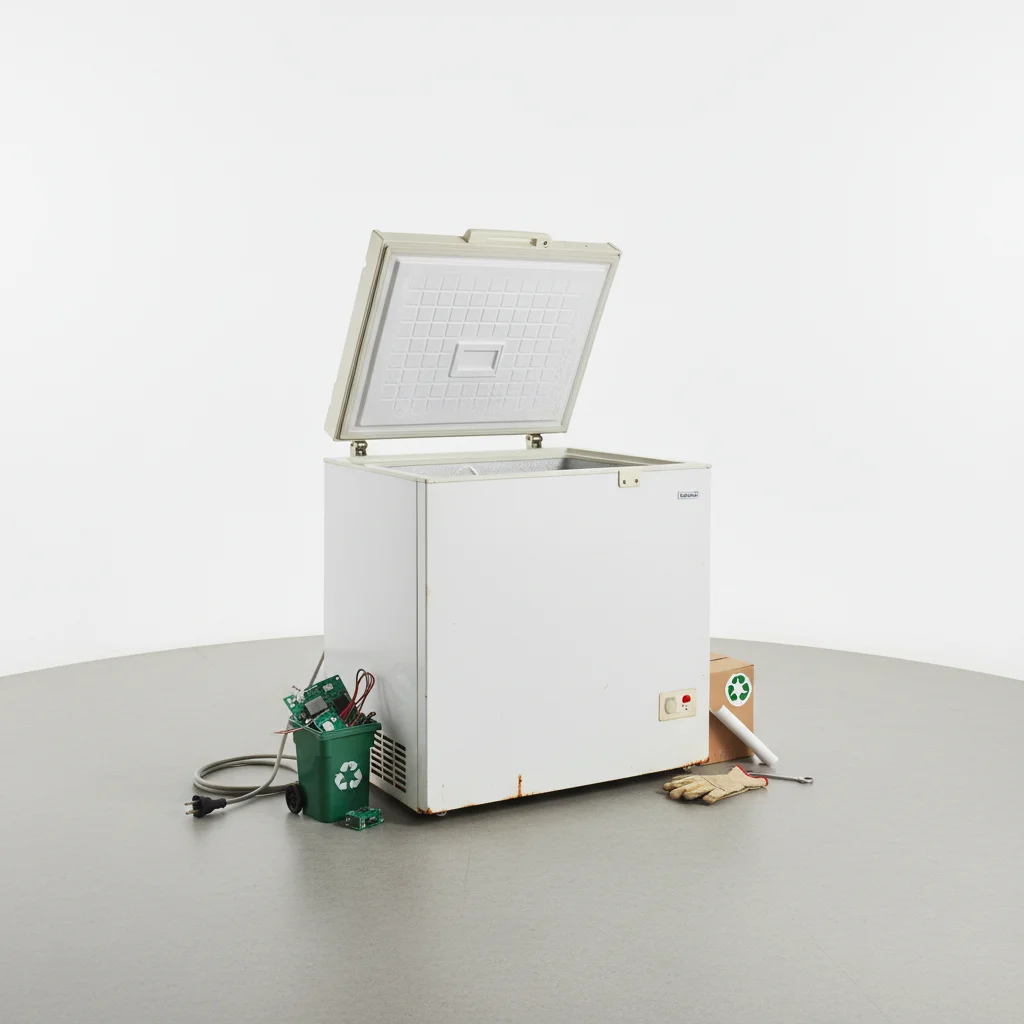
Proper chest freezer disposal is crucial for environmental safety and often involves specific local regulations. In most areas, you cannot simply put an old chest freezer out with your regular trash due to the refrigerants and other hazardous materials it contains. The most common methods for disposal include municipal bulky waste collection, retail take-back programs, and certified appliance recyclers.
Why Proper Disposal Matters
Chest freezers, like other refrigeration appliances, contain refrigerants such as hydrofluorocarbons (HFCs) or older chlorofluorocarbons (CFCs) and hydrochlorofluorocarbons (HCFCs). These substances are potent greenhouse gases that contribute to climate change and ozone depletion if released into the atmosphere. Additionally, freezers contain oils, metals, and plastics that can be recycled or require special handling to prevent environmental contamination. Improper disposal can lead to fines and environmental damage. For see our chest freezer recommendations on this site.
Municipal Bulky Waste Collection
Many cities and counties offer bulky waste collection services that include large appliances. This service often requires scheduling a pickup in advance and may involve a fee. Check your local waste management website or contact their customer service to understand the specific requirements, acceptable items, and scheduling procedures. Some municipalities have designated drop-off centers for appliances.
- Verify if your municipality offers appliance pickup.
- Schedule a pickup appointment, if required.
- Be aware of any associated fees.
- Ensure the freezer is empty and defrosted.
Retailer Take-Back Programs
|
Our Picks for the Best Chest Freezer in 2026
As an Amazon Associate I earn from qualifying purchases.
|
||
| Num | Product | Action |
|---|---|---|
| 1 | Chest Freezer Small Deep Freezer 3.5 Cu.Ft Mini Freezer with Removable Baskets & 6 Adjustable Temperature (Down to -11°F)& Top Open Door, Mini Compact Freezer Suitable for Apartments, Kitchen, White |

|
| 2 | Avanti Upright Freezer Compact Design with 3 Fixed Metal Shelves, Reversible Door Adjustable Temperature Control and Flush-Back Design Perfect for Home, Office, Basements & More, 2.8-Cu.Ft, White |
|
| 3 | Koolatron Deep Freezer - 3.5 Cubic Feet, White Chest Freezer, 1 Wire Basket, Garage Ready, Meat Storage, Front Drain, Congelador For Home, Apartment, Basement, Dorm, Cottage, Manual Defrost, Stand Up |
|
| 4 | Whynter Upright Small Freezer Mini Freezer with Lock for Bedrooms, Dorms, Garages, Offices CUF-110B, Black Energy Star, 1.1 Cu Ft |
|
| 5 | SPT UF-114W Upright Freezer, White, 1.1 Cubic Feet |
|
| 6 | 2 Pack Refrigerator Thermometer, 30-30°C/20-80°F, Classic Fridge Thermometer Large Dial with Red Indicator Thermometer for Freezer Refrigerator Cooler |
|
| 7 | Commercial Solid Top Chest Freezer by Atosa |
|
| 8 | BLACK+DECKER 1.2 Cu. Ft. Compact Upright Freezer, Mini Deep Freeze with Full-Width Wire Shelf |
|
| 9 | BESTYASH Freezer Organizer Divider Adjustable Chest Freezer Organizer with Breathable Layered Mesh for Refrigerator and Freezer Food and Beverage Storage 15.9X15.9X12.6 Inches |
|
| 10 | Koolatron 1.2 Cubic Feet Capacity White Upright freezer - 1 wired shelf, Garage Ready, Meat Storage, Manual Defrost, Space Saving, Congelador For Home, Apartment, Basement, Dorm, Room |
|
When purchasing a new chest freezer, many appliance retailers offer a take-back or haul-away service for your old unit. This is often the most convenient option, as the delivery team will remove the old appliance when they deliver the new one. Confirm this service with the retailer before your purchase, as some may charge an additional fee or have specific conditions, such as the old unit being disconnected and defrosted.
Certified Appliance Recyclers
For those not buying a new unit or whose municipality doesn’t offer collection, finding a certified appliance recycler is an excellent option. These facilities are equipped to safely remove refrigerants and other hazardous components, then dismantle the appliance for recycling its various materials. Search online for “appliance recycling near me” or “scrap metal yards that take appliances” to find local options. Always confirm they are certified to handle refrigerants.
Preparing Your Freezer for Disposal
Regardless of the disposal method, you must prepare your chest freezer. First, ensure it is completely empty of food and defrosted. Disconnect it from power and allow any ice to melt, draining the water. Clean the interior to prevent odors. For safety, especially if children are present, consider removing the door or securing it shut to prevent accidental entrapment.
