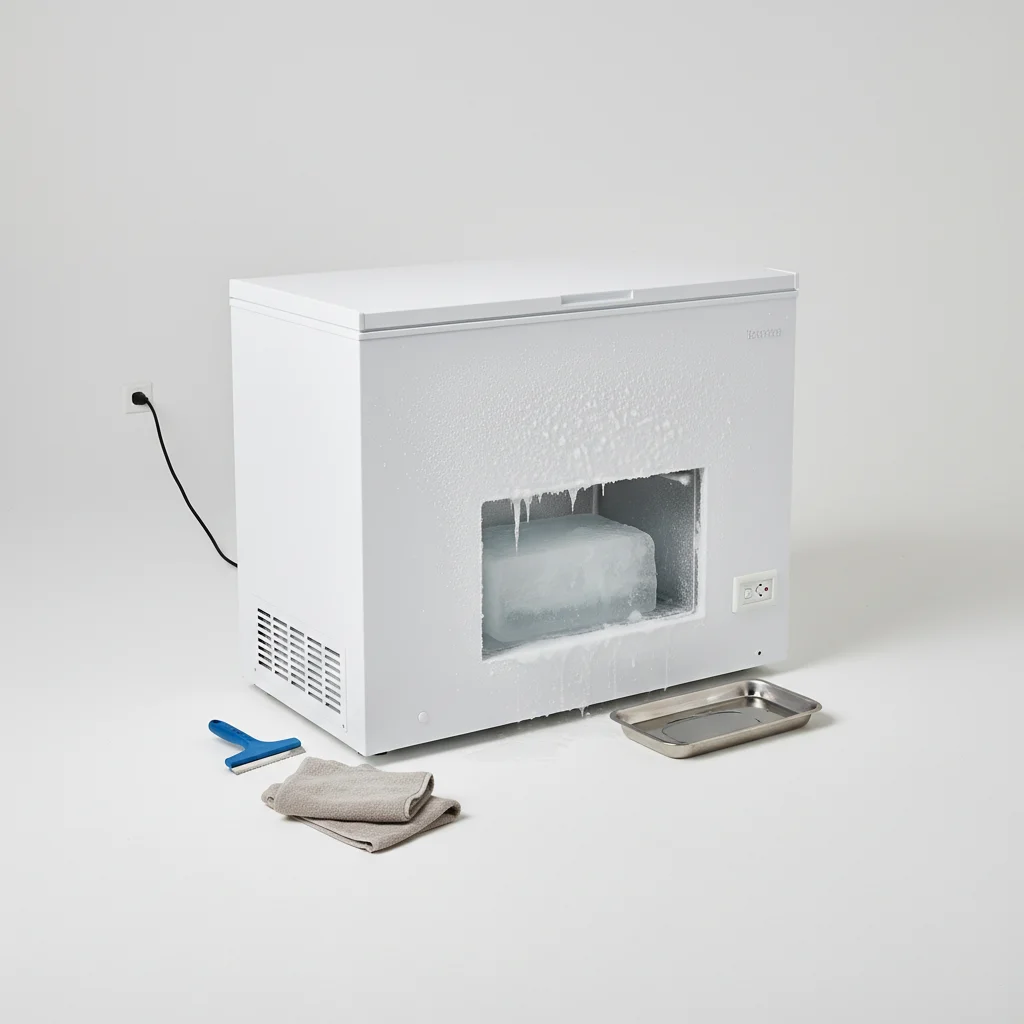
Chest freezer defrosting is a crucial maintenance task that should be performed at least once a year, or more frequently if ice buildup exceeds a quarter-inch. Regular defrosting ensures optimal energy efficiency, prevents damage to the freezer’s components, and maximizes storage capacity by eliminating thick layers of frost.
Why Regular Defrosting Matters for Your Chest Freezer
Ignoring ice buildup in your chest freezer can lead to several problems. A thick layer of frost acts as an insulator, forcing the compressor to work harder and consume more energy to maintain the desired temperature. This not only increases your electricity bill but also shortens the lifespan of the appliance. Furthermore, excessive ice reduces the usable storage space, making it difficult to organize and access your frozen goods. For more chest freezer guides on this site.
Defrosting also helps to prevent food spoilage. While a freezer is designed to keep food frozen, a fluctuating temperature caused by inefficient operation can lead to freezer burn and a decline in food quality. A clean, frost-free interior ensures a consistent temperature environment for your stored items.
Signs Your Chest Freezer Needs Defrosting
Beyond the annual recommendation, several indicators suggest your chest freezer is due for a defrost. The most obvious sign is a visible layer of ice or frost on the interior walls, especially if it’s thicker than a quarter-inch. You might also notice your freezer running more frequently or making unusual noises, which can be a sign of the compressor working overtime.
Another common sign is difficulty closing the lid or door properly due to ice accumulation around the gasket. If you observe a significant reduction in available storage space, even after reorganizing, it’s likely due to internal frost. Addressing these signs promptly will help maintain your freezer’s efficiency and prevent further issues.
The Best Time to Defrost Your Chest Freezer
|
Our Picks for the Best Chest Freezer in 2026
As an Amazon Associate I earn from qualifying purchases.
|
||
| Num | Product | Action |
|---|---|---|
| 1 | BESTYASH Freezer Organizer Divider Adjustable Chest Freezer Organizer with Breathable Layered Mesh for Refrigerator and Freezer Food and Beverage Storage 15.9X15.9X12.6 Inches |

|
| 2 | Avanti Upright Freezer Compact Design with 3 Fixed Metal Shelves, Reversible Door Adjustable Temperature Control and Flush-Back Design Perfect for Home, Office, Basements & More, 2.8-Cu.Ft, White |
|
| 3 | Commercial Solid Top Chest Freezer by Atosa |
|
| 4 | Chest Freezer Small Deep Freezer 3.5 Cu.Ft Mini Freezer with Removable Baskets & 6 Adjustable Temperature (Down to -11°F)& Top Open Door, Mini Compact Freezer Suitable for Apartments, Kitchen, White |
|
| 5 | Koolatron Deep Freezer - 3.5 Cubic Feet, White Chest Freezer, 1 Wire Basket, Garage Ready, Meat Storage, Front Drain, Congelador For Home, Apartment, Basement, Dorm, Cottage, Manual Defrost, Stand Up |
|
| 6 | BLACK+DECKER 1.2 Cu. Ft. Compact Upright Freezer, Mini Deep Freeze with Full-Width Wire Shelf |
|
| 7 | SPT UF-114W Upright Freezer, White, 1.1 Cubic Feet |
|
| 8 | 2 Pack Refrigerator Thermometer, 30-30°C/20-80°F, Classic Fridge Thermometer Large Dial with Red Indicator Thermometer for Freezer Refrigerator Cooler |
|
| 9 | Koolatron 1.2 Cubic Feet Capacity White Upright freezer - 1 wired shelf, Garage Ready, Meat Storage, Manual Defrost, Space Saving, Congelador For Home, Apartment, Basement, Dorm, Room |
|
| 10 | Whynter Upright Small Freezer Mini Freezer with Lock for Bedrooms, Dorms, Garages, Offices CUF-110B, Black Energy Star, 1.1 Cu Ft |
|
The ideal time to defrost your chest freezer is when its contents are at their lowest, such as before a major grocery shopping trip or when you’ve consumed most of your frozen items. This minimizes the amount of food you need to temporarily store and reduces potential waste. Planning ahead allows you to prepare coolers or a secondary freezer for temporary food storage.
Consider defrosting during cooler months if possible, as this can help keep your food frozen for longer while it’s outside the freezer. Avoid defrosting during hot, humid weather, as this can accelerate ice melting and make the process messier.
Step-by-Step Guide to Efficient Chest Freezer Defrosting
Defrosting a chest freezer doesn’t have to be a daunting task. Follow these steps for an efficient and mess-free process:
- Unplug the freezer: Always disconnect the power before starting.
- Empty the freezer: Transfer all food to coolers with ice packs or another freezer.
- Allow ice to melt naturally: Keep the lid open and place towels around the base to catch water.
- Speed up melting (optional): Use a fan, bowls of hot water, or a plastic scraper (never metal).
- Clean the interior: Wipe down with a solution of baking soda and water.
Once the interior is completely dry, you can plug the freezer back in and allow it to cool down to the desired temperature before returning your food. This thorough cleaning and drying process helps prevent mold and mildew growth.
Maintaining a Frost-Free Chest Freezer
To minimize the frequency of defrosting, consider these preventative measures. Ensure the freezer lid is always sealed tightly; a faulty gasket can allow warm, moist air to enter, leading to frost buildup. Avoid placing hot food directly into the freezer, as the steam will contribute to ice formation. Regularly check and clean the condenser coils, as dust and debris can hinder efficiency.
Additionally, try to open the freezer as infrequently as possible and for the shortest duration. The less warm air that enters, the slower the frost will accumulate. For a reliable chest freezer that minimizes frost, consider models like thewhich features advanced insulation. If you’re looking for a compact option with excellent temperature stability, theis a top choice.
