A chest freezer is a household hero, perfect for bulk buying and extending the shelf life of your favorite foods. But over time, that invaluable appliance can accumulate layers of ice, diminishing its efficiency and making it a challenge to find what you need. When ice buildup becomes significant, it’s time for a defrost. While the thought of tackling a frosty chest freezer might seem daunting, especially when you’re short on time, a strategic approach can make the process quick and painless. This guide, drawing on years of expertise with various freezer models, will walk you through effective, DIY methods to defrost your chest freezer swiftly and safely, ensuring it runs optimally for years to come.
Why Defrost Your Chest Freezer?
Regular defrosting is more than just a chore; it’s essential maintenance that keeps your chest freezer running at its best. An excessive ice buildup, typically exceeding 1/4 inch (or 5-10mm) thick, forces the compressor to work harder, consuming more electricity and increasing your energy bills. This inefficiency can also lead to inconsistent temperatures, potentially compromising food quality and safety. Beyond performance, a thick layer of ice reduces usable storage space, making it difficult to organize and retrieve items. Defrosting at least once a year, or when frost becomes noticeable, ensures your freezer operates efficiently, keeps your food safe, and remains easy to manage.
Preparation Steps for Defrosting
Before you even think about melting ice, thorough preparation is crucial for a smooth and quick defrosting process. Skipping these initial steps can lead to a messy situation and potentially thawed food.
Reduce Your Inventory
|
Our Picks for the Best Chest Freezer in 2026
As an Amazon Associate I earn from qualifying purchases.
|
||
| Num | Product | Action |
|---|---|---|
| 1 | SPT UF-114W Upright Freezer, White, 1.1 Cubic Feet |

|
| 2 | BESTYASH Freezer Organizer Divider Adjustable Chest Freezer Organizer with Breathable Layered Mesh for Refrigerator and Freezer Food and Beverage Storage 15.9X15.9X12.6 Inches |
|
| 3 | Commercial Solid Top Chest Freezer by Atosa |
|
| 4 | Avanti Upright Freezer Compact Design with 3 Fixed Metal Shelves, Reversible Door Adjustable Temperature Control and Flush-Back Design Perfect for Home, Office, Basements & More, 2.8-Cu.Ft, White |
|
| 5 | Koolatron Deep Freezer - 3.5 Cubic Feet, White Chest Freezer, 1 Wire Basket, Garage Ready, Meat Storage, Front Drain, Congelador For Home, Apartment, Basement, Dorm, Cottage, Manual Defrost, Stand Up |
|
| 6 | 2 Pack Refrigerator Thermometer, 30-30°C/20-80°F, Classic Fridge Thermometer Large Dial with Red Indicator Thermometer for Freezer Refrigerator Cooler |
|
| 7 | Koolatron 1.2 Cubic Feet Capacity White Upright freezer - 1 wired shelf, Garage Ready, Meat Storage, Manual Defrost, Space Saving, Congelador For Home, Apartment, Basement, Dorm, Room |
|
| 8 | Chest Freezer Small Deep Freezer 3.5 Cu.Ft Mini Freezer with Removable Baskets & 6 Adjustable Temperature (Down to -11°F)& Top Open Door, Mini Compact Freezer Suitable for Apartments, Kitchen, White |
|
| 9 | BLACK+DECKER 1.2 Cu. Ft. Compact Upright Freezer, Mini Deep Freeze with Full-Width Wire Shelf |
|
| 10 | Whynter Upright Small Freezer Mini Freezer with Lock for Bedrooms, Dorms, Garages, Offices CUF-110B, Black Energy Star, 1.1 Cu Ft |
|
Ideally, plan your defrost when your chest freezer’s contents are at their lowest. Over a week or two leading up to your defrost day, try to use up as many frozen items as possible. This minimizes the amount of food you’ll need to store temporarily.
Power Down and Unplug
Safety first: switch off and unplug your chest freezer completely. Simply turning it off isn isn’t enough; disconnecting from the power source prevents any electrical hazards, especially when water is involved.
Empty and Preserve Food
Remove all frozen food items from the freezer. Transfer them immediately to insulated coolers, cardboard boxes lined with blankets, or even sleeping bags to keep them frozen. If you have a large quantity, consider asking a neighbor for temporary storage. Remove any baskets, shelves, or dividers, setting them aside for cleaning. If they’re frozen in place, don’t force them; they’ll become easier to remove as the ice melts.
Prepare the Area for Water Drainage
Melting ice means water, and you’ll want to be prepared. Lay down old towels, plastic sheeting, or newspapers both inside and around the freezer’s base to absorb water and protect your floor. Many chest freezers have a drainage plug or a hose; if yours does, position a shallow pan or bucket directly beneath it to collect the melting water. If not, be ready with plenty of absorbent materials and a mop.
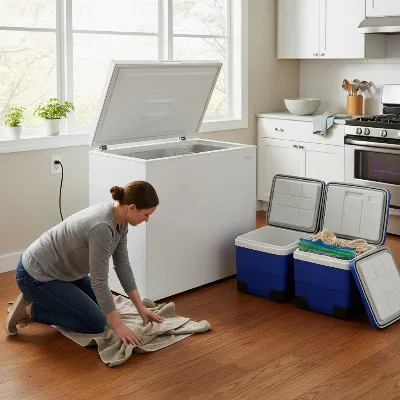 Preparing a chest freezer for defrosting with towels and empty coolers nearby
Fastest Methods for Defrosting a Chest Freezer
Once your chest freezer is empty and the area is prepped, it’s time to accelerate the melting process. While simply leaving the lid open will eventually work, these methods can significantly cut down the waiting time.
The Hot Water Bowl Technique
One of the most effective and safest ways to speed up defrosting is using hot water. Place several bowls or pans filled with hot (but not boiling, unless placed on a thick towel to protect the interior) water inside the freezer. Close the lid for 20-30 minutes to trap the steam, which will quickly loosen the ice from the freezer walls. Replace the water as it cools to maintain consistent heat. This method leverages thermodynamics to do most of the work for you.
Fan Power
A simple household fan can be surprisingly effective, especially for chest freezers where cold air tends to pool at the bottom. Position a fan to blow room-temperature air directly into the open freezer cavity. The circulating air helps to push out the cold air and introduce warmer air, accelerating the ice melt. This is a hands-off approach that complements other methods well.
Cautious Heat Application
For stubborn spots, you might consider carefully using a hair dryer or heat gun. Extreme caution is paramount with electrical appliances near water. Keep the appliance and its cord away from any moisture, ensure your hands are dry, and use it only to gently warm the ice, not directly on the freezer walls. Avoid concentrating heat on one spot for too long, as this can damage the freezer lining. Always keep the area around the freezer dry to prevent electrical hazards.
Gentle Scraping
As the ice begins to soften and loosen, you can gently assist its removal. Use a plastic scraper, spatula, or a wooden spoon to pry off chunks of ice. Never use metal objects, knives, or sharp tools, as these can easily puncture the freezer liner, causing irreversible damage and costly repairs. Slide the freed ice chunks to the bottom of the freezer for easy removal.
Cleaning Your Chest Freezer After Defrosting
After all the ice has melted and been removed, your chest freezer is ready for a thorough cleaning. This step ensures hygiene and helps prevent future frost buildup.
Wipe Away Residue and Dry Thoroughly
Once all the ice and water are gone, wipe down the interior walls, bottom, and any removed baskets or shelves with a clean cloth. For a deeper clean, use warm, soapy water or a mild cleaning solution. Be sure to rinse thoroughly to remove any soap residue. The most critical step here is to dry every surface completely. Any remaining moisture will turn into new ice as soon as the freezer is plugged back in, defeating the purpose of your hard work. Pay special attention to drying the gasket seal around the lid, as moisture here can lead to seal issues and frost.
Preventing Future Ice Buildup
A little preventative maintenance goes a long way in keeping your chest freezer efficient and reducing the frequency of future defrosts.
- Minimize Door Openings: Every time you open the lid, warm, humid air enters the freezer, contributing to frost formation. Try to retrieve items quickly and avoid prolonged openings.
- Store Food Properly: Ensure all food items are sealed in airtight containers or freezer bags before placing them in the freezer. Uncovered food releases moisture, which then freezes onto the walls.
- Cool Food Before Freezing: Never place warm or hot food directly into the freezer. Allow it to cool completely in the refrigerator first.
- Regular Inspections: Periodically check the freezer’s gasket seal for cracks or damage. A faulty seal allows warm air to seep in, accelerating ice buildup. Clean the gasket regularly to ensure a tight seal.
- Wipe Off Frost: If you notice a thin layer of frost on items, wipe it off before returning them to the freezer.
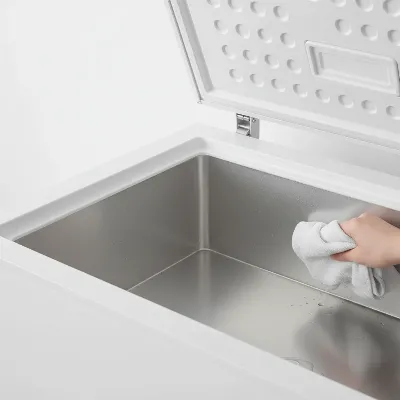 Clean and dry interior of a chest freezer after defrosting
Common Mistakes to Avoid
Defrosting a chest freezer is straightforward, but certain missteps can lead to damage or inefficiencies. Be mindful of these common errors:
- Using Metal or Sharp Tools: This is perhaps the most critical mistake. Puncturing the freezer’s liner with a knife or ice pick can cause irreversible damage to the cooling system, leading to expensive repairs or even requiring a new appliance.
- Not Unplugging the Freezer: Forgetting to unplug the unit poses a serious electrical hazard, especially when dealing with water. Always disconnect power before starting.
- Refreezing Thawed Food: Any food that has fully thawed should not be refrozen. This can lead to bacterial growth and foodborne illness. Plan your defrost carefully to minimize food spoilage.
- Ignoring Water Drainage: Failing to prepare for the melting water can result in damaged flooring or surrounding cabinetry. Always lay down protective materials and have a plan for water collection.
- Not Drying Thoroughly: Leaving moisture inside the freezer ensures that new ice will form almost immediately upon restarting, negating your efforts.
“A well-maintained chest freezer is not only more energy-efficient but also extends the life of your stored goods. Dedicate time to a proper defrost and cleaning, and your freezer will thank you.” – Admin, ReviewSlate.com, Chest Freezer Technician
Conclusion
Defrosting your chest freezer doesn’t have to be an all-day ordeal. By following these tried-and-true DIY methods, from strategic preparation to accelerated ice removal and thorough cleaning, you can quickly restore your appliance to peak efficiency. Regular defrosting not only saves you money on energy bills and keeps your food safer but also extends the overall lifespan of your valuable chest freezer. Remember to prioritize safety by unplugging the unit and never using sharp objects. With these tips, you’re well-equipped to tackle frost buildup with confidence, ensuring your chest freezer remains a reliable workhorse in your home.
When was the last time you gave your chest freezer the attention it deserves?
